The global market for advanced automotive diagnostic scan tools, valued at USD 43.99 billion in 2025, is projected to nearly double to USD 87.53 billion by 2035, according to Precedence Research. The projected market growth confirms a rising demand for specialized equipment, as vehicle maintenance increasingly requires sophisticated technological solutions to diagnose and resolve complex system faults.
However, vehicle systems are becoming increasingly software-defined and integrated, yet the diagnostic tool market remains heavily reliant on specialized hardware. This creates a disconnect where advanced software in vehicles necessitates physical interfaces for diagnostics, rather than simplifying the process to purely software-based solutions.
The automotive repair industry will likely see a continued consolidation of expertise and resources around advanced diagnostic hardware. This trend will increase barriers to entry for smaller shops and drive up specialized repair costs. Automakers have not fully integrated software-defined vehicle architectures with streamlined, software-only diagnostic solutions, inadvertently fueling this hardware-centric aftermarket.
What Are Advanced Diagnostic Tools?
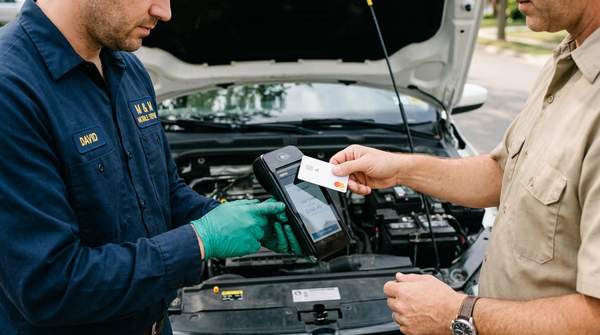
Advanced diagnostic tools are sophisticated systems that interface with modern vehicle electronics, moving beyond basic error code readers. These tools interpret complex data streams from a vehicle's Electronic Control Units (ECUs), which manage everything from engine performance to safety systems. They identify precise faults, analyze live sensor data, and perform bidirectional controls like activating components or recalibrating systems, as detailed in The Complete Guide to Advanced Automotive Diagnostics. This capability allows mechanics to pinpoint issues generic scanners cannot detect, ensuring accurate and efficient vehicle maintenance.
Hardware Still Reigns Supreme
In 2025, the hardware segment dominated the automotive diagnostics scan tool market by offering type, according to Precedence Research. The hardware segment's dominance confirms physical interfaces and specialized components remain indispensable for comprehensive vehicle analysis. The robust growth of the hardware diagnostic market, despite the industry's shift towards software-defined vehicles, creates significant barriers to universal, software-only diagnostic platforms. This forces mechanics and service centers to invest heavily in specialized physical tools to keep pace with automotive innovation, limiting the reach of independent repair facilities.