AI Diagnostics Revolutionize Auto Repair, Defying Traditional Tools

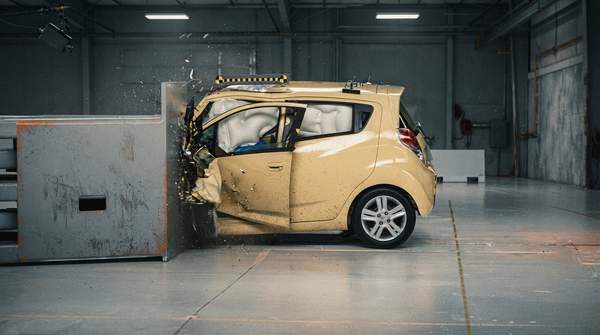
In just five years, the percentage of US auto claims settled using photos rather than in-person visits by adjusters has surged from about 15 percent before the pandemic to 60 percent, with an expectat

LO
Luis Ortega

April 21, 2026 · 3 min read

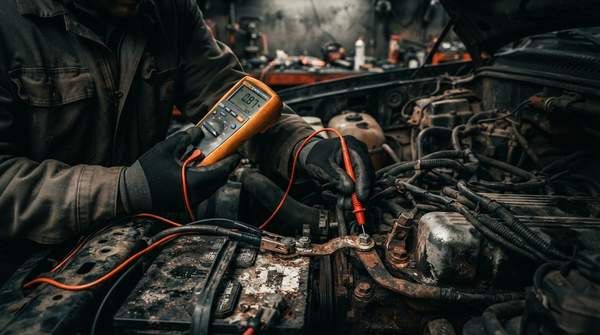
A futuristic AI diagnostic system analyzing a car engine, with traditional tools in the background, symbolizing the evolution of auto repair.

In just five years, the percentage of US auto claims settled using photos rather than in-person visits by adjusters has surged from about 15 percent before the pandemic to 60 percent, with an expectation to reach 80 percent by 2025, according to Wired. The surge in US auto claims settled using photos from 15 percent before the pandemic to 60 percent, with an expectation to reach 80 percent by 2025 reflects a broader transformation across the entire automotive service industry, driven by advancements in diagnostic technology.

However, while automotive diagnostics and repair are rapidly automating with AI and software for efficiency and accuracy, this advancement simultaneously diminishes the role of traditional human expertise. It also creates a significant barrier to entry for smaller operations, complicating the future of vehicle maintenance and repair.

Therefore, the automotive service sector is likely to see accelerated consolidation and a critical demand for a digitally proficient workforce, leaving behind those who fail to adapt to the software-defined future.

The Software-Defined Garage

AutoSonix has developed an AI platform that converts mechanical sounds into diagnostic data, marking a clear pivot from traditional mechanical diagnosis, according to Automotive News. This innovative approach moves beyond simple fault codes to interpret complex vehicle sounds, providing granular insights into potential issues. Furthermore, by 2030, 90% of all vehicle-related innovations are expected to consist of software, fundamentally altering the required skill set for technicians, reports Autobody News. The development of AutoSonix's AI platform and the expectation that 90% of all vehicle-related innovations will consist of software by 2030 mean that the core competency of vehicle repair is shifting from mechanical aptitude to proficiency in data interpretation and software management, demanding a retooling of the entire service workforce.

Quantifying Automation's Impact

  • 50% — Half of all auto insurance claims now involve at least some AI tools, streamlining processes and reducing human touchpoints, according to Wired.
  • 25% — Tractable reports that 25 percent of its estimates are accurate enough to not require human intervention, with a goal to reach 75 percent by the end of 2026, boosting efficiency in claims processing.
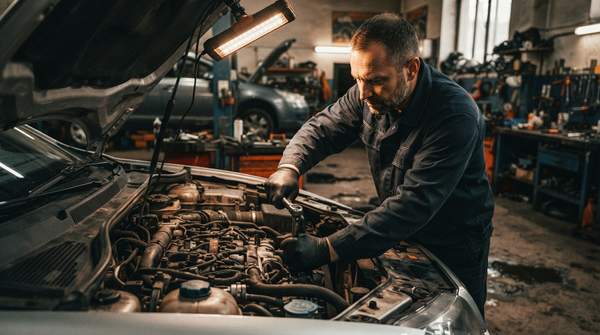
The increasing reliance on AI for claims and automated estimations signifies a fundamental restructuring of operational overhead. The increasing reliance on AI for claims and automated estimations, which signifies a fundamental restructuring of operational overhead, allows insurers to reallocate resources from manual appraisal to digital verification, directly impacting the profitability models of traditional repair facilities.

Beyond the Wrench: Advanced Diagnostics in Action

Diagnostic AspectTraditional ApproachAdvanced Diagnostics (2026)
Test ScopeLimited to basic voltage and capacity checks.Measures voltage, capacity, thermal performance, and charge/discharge cycles quickly and accurately.
ScalabilityManual or semi-automated, struggles with high volume and complexity.Scales seamlessly to handle increased volume and complexity, even with high-performance batteries.
Test ScenariosRestricted to standard, known failure modes.Handles complex test scenarios, such as experimenting with next-generation chemistries or validating new cooling systems.
System AdaptabilityRequires significant overhaul for capacity expansion.Modular designs allow for expansion of testing capacity without overhauling the entire setup.

Source: SAABRDS

Modern diagnostic systems, particularly for complex components like EV batteries, are moving towards highly adaptable, comprehensive, and scalable solutions that far surpass previous capabilities. Modern diagnostic systems, particularly for complex components like EV batteries, are moving towards highly adaptable, comprehensive, and scalable solutions that far surpass previous capabilities, redefining the benchmark for repair quality and efficiency and making older, less capable systems obsolete for advanced vehicle service.

The Bifurcating Market: Who Thrives, Who Struggles

The market is bifurcating into a high-volume segment for basic fault-code reading and a premium segment focused on predictive analytics and integrated software, according to IndexBox. The market's bifurcation into a high-volume segment for basic fault-code reading and a premium segment focused on predictive analytics and integrated software implies a future where smaller shops, unable to invest in advanced AI, may be relegated to lower-margin services. Furthermore, by 2035, 75% of auto industry executives anticipate that the software-defined experience will be the core of brand value, as reported by Autobody News. The market's split into high-volume and premium segments, coupled with 75% of auto industry executives anticipating that the software-defined experience will be the core of brand value by 2035, means only businesses investing in advanced, integrated solutions will capture the high-value, future-proof segment of the repair industry, leaving others behind.

The automotive service sector will likely consolidate around digitally proficient enterprises, as the cost and complexity of advanced diagnostic tools create an insurmountable barrier for traditional, undercapitalized operations.