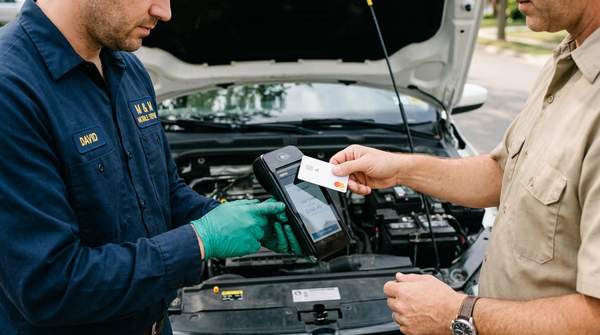
A recent industry audit revealed that over 40% of automotive repair shops operate with diagnostic scan tools that are out of calibration, leading to an estimated $1.5 billion in avoidable repair costs annually across North America. Widespread oversight means countless vehicles receive inaccurate diagnoses, potentially leaving safety issues unaddressed and increasing the risk for drivers on the road.
Modern automotive diagnostic tools are designed for precision, but their complex internal components and software require consistent, specialized upkeep to maintain that accuracy. The very sophistication intended to enhance safety paradoxically amplifies risk when these instruments are neglected.
The automotive service industry unknowingly accumulates significant financial and reputational risk by underestimating the critical role of diagnostic tool maintenance. Systemic failure creates a hidden public safety crisis, making modern vehicles less safe despite their advanced onboard diagnostics.
The Silent Workhorse: Understanding Your Diagnostic Tools
Modern diagnostic tools integrate sophisticated sensors, microprocessors, and proprietary software to communicate with vehicle ECUs, as per the Bosch Automotive Handbook. These are not simple 'plug-and-play' units; their complex internal components and software drift over time due to component aging or corruption, as detailed in the Snap-on Diagnostics Technical Manual. Inherent degradation, often masked by perceived ease of use, leads to widespread neglect and inaccurate diagnoses. Calibration aligns the tool's internal measurements with traceable standards, preventing erroneous readings, according to NIST Traceability Guidelines. True accuracy is not inherent but a product of diligent upkeep.
Beyond the Screen: A Deep Dive into Calibration Protocols
Annual professional calibration by certified centers is recommended for most advanced scan tools, involving proprietary software updates and hardware adjustments, states an OTC Tools Service Bulletin. However, accuracy also hinges on daily operational checks—verifying cable integrity and software versions—as advised in the Autel User Guide. Environmental factors like temperature, humidity, and physical shocks degrade internal circuitry, necessitating careful storage, according to Fluke Calibration Best Practices. Furthermore, quarterly software updates from Launch Tech are critical for new vehicle compatibility and refining algorithms. Neglecting these seemingly minor daily routines and environmental controls can undermine even professional calibration, leading to intermittent diagnostic failures.