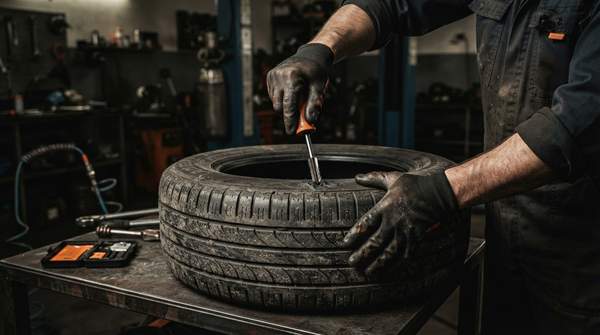
Here is the short answer most drivers need after picking up a nail: your tire is a candidate for a permanent repair only if the puncture sits in the central tread area, measures no more than 1/4 inch (6mm) across, and the tire still has at least 2/32 of an inch of tread everywhere. Even then, only one method counts as permanent in the eyes of the tire industry: a professional plug-patch combination installed after the tire is removed from the wheel and inspected from the inside. The DIY string plug in your trunk is an emergency tool, not a repair.
Understanding Tire Puncture Repair Standards
Two industry bodies set the rules that reputable shops follow: the U.S. Tire Manufacturers Association, whose member companies build the tires, and the Tire Industry Association, which trains the technicians who fix them. Their guidelines converge on the same core requirements, and both organizations are blunt that the stakes are high. As the Tire Industry Association puts it, "When tires are repaired improperly, the results can be deadly."
The standards exist because a puncture is rarely just a hole. The association warns that a simple nail in the tread can cause severe hidden damage to the sidewall, damage that is invisible from the outside. That is why the industry's first requirement is not about plugs or patches at all: the tire must come off the rim so a trained technician can inspect the interior before anyone decides it is repairable. Not all tires can be repaired, and both organizations say so explicitly.
Tire Puncture Repair Decision Framework
Work through the checks below in order. Each row pairs an industry-standard criterion with the action it points to, so you can classify your own puncture before you spend money or drive another mile on a suspect tire.
| Check | Industry-standard criterion | Your action |
|---|---|---|
| Puncture location | Repairable only in the central tread area; shoulder and sidewall punctures are not repairable because these areas flex constantly | Tread puncture: continue. Shoulder or sidewall: replace the tire |
| Puncture size | No larger than 1/4 inch (6mm) in diameter | At or under: continue. Over: replace the tire |
| Multiple injuries | Repairs cannot overlap; injuries that overlap or sit directly across from each other mean the tire must be scrapped | Overlapping or opposing punctures: replace the tire |
| Tread depth | At least 2/32 of an inch remaining across the entire tread; tires worn to the treadwear indicators should not be repaired | Adequate depth: continue. Worn to indicators: replace the tire |
| Internal inspection | Tire must be demounted from the rim and inspected inside by a trained technician | Any repair decision is provisional until the inside is examined |
| Repair method | A rubber stem (plug) must fill the injury and a patch must seal the innerliner, typically as a one-piece combination unit | Passes all checks: professional plug-patch repair. Fails any check: replacement |
The framework's logic is cumulative: a single failed criterion ends the evaluation. A puncture can be perfectly sized and still be unrepairable because of where it sits or what the inspection reveals inside. If there is any question that the injury extends into the shoulder or belt edge area, the USTMA guidance is to take the tire out of service entirely.
Temporary Fixes: The DIY String Plug
The string plug kit in your glovebox has a legitimate job, and it is a narrow one. AAA describes the plug as a simple stopper: internal air pressure jams the tacky plug material against the sides of the puncture, but the plug creates no chemical or vulcanized bond with the tire. That mechanical seal is why the plug can hold air for a while, and also why it cannot be trusted indefinitely.
Per AAA's guidance, a plug is the right tool only as a temporary roadside repair, meant to get a vehicle off a dangerous highway shoulder and directly to a tire shop, and only for a clean puncture in the main tread no larger than the industry-standard 1/4 inch. In short, the plug buys you a trip to a professional, nothing more. MotorTrend's automotive writers add a practical caution for the home mechanic: a DIY plug addresses only the visible hole, not the potential internal damage from the puncture itself or from driving on an underinflated tire afterward.
Why Improper Repairs Are Unsafe
The most common shortcut is also the most misunderstood: a plug alone or a patch alone is not an acceptable repair, even when a shop installs it. The Tire Industry Association explains the failure mode precisely. A plug by itself does not permanently seal the innerliner, and a patch by itself does not fill the void left by the penetrating object. That open channel allows water to enter the body of the tire and start corroding the steel belts.
The same logic applies to the sealant kits and emergency inflators many cars carry instead of a spare. The association does not recommend them as long-term solutions for the same reason: they seal the outside without restoring the tire's internal integrity. The pattern to recognize is that every rejected method shares one flaw, an incomplete seal that either leaks air over time or lets moisture reach the tire's structure. A repair that skips the dismount-and-inspect step inherits the same flaw, because no one has verified what the puncture actually did inside.
The Professional, Permanent Plug-Patch Repair
The method both industry bodies endorse does two jobs at once. After the tire is demounted and the interior is inspected, the technician removes the damaged material, fills the puncture channel with a rubber stem (the plug), and seals the innerliner with a patch, often using a one-piece combination unit that performs both functions. The stem fills the void; the patch seals the airtight inner liner. Neither component alone does both.
This is why the combination repair is considered permanent: it closes the injury from the inside and the outside, blocking both air loss and moisture intrusion. It also carries a benefit no roadside fix can match, because the mandatory internal inspection catches hidden sidewall damage before the tire goes back into service. MotorTrend notes that a professional repair job typically takes around 20 minutes and is relatively inexpensive compared with the alternative, which is worth weighing against the cost of a replacement tire. Two boundaries apply here: this article is not a guide to performing a plug-patch repair yourself, which requires professional tools and training, and run-flat tires follow manufacturer-specific repair policies that this framework does not cover.
Making the Right Decision for Your Flat Tire
Always prioritize safety by adhering to industry-standard repair guidelines; opt for professional plug-patch repairs for permanent solutions, and use DIY plugs strictly as temporary measures to reach a repair facility. In practice, that means running the framework above before anything else: confirm the puncture is in the central tread, at or under 1/4 inch, on a tire with at least 2/32 of an inch of tread and no overlapping injuries. If any check fails, the decision is replacement. If they all pass, ask the shop directly whether it demounts the tire and uses a combination plug-patch unit, the question the Tire Industry Association tells consumers to ask.
The outcome you can verify is concrete: the tire maintains proper inflation pressure and shows no signs of air loss or structural degradation after a professional repair, or the vehicle safely reaches a repair shop after a temporary plug. Check the repaired tire's pressure over the following days and weeks. Steady pressure with no slow loss is the measurable sign that the repair was done to standard and your tire is back in service for the rest of its useful life.
Sources
- Tire Repair Basics — Ustires
- Tire Plug vs. Patch: Get the Right Tire Repair — AAA
- Tire Repair — Tire Industry Association
- Tire Patch vs. Tire Plug: Which Repair Method is Best? — MotorTrend