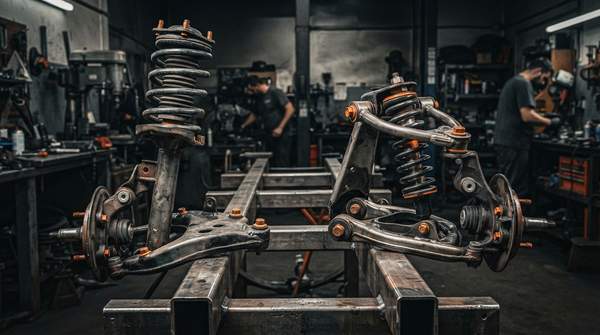
OEMs, tier-one suppliers, proving grounds, and advanced research institutions conduct extensive ride comfort evaluations, meticulously characterizing vibration paths. This rigorous process aims to optimize every component, from vehicle suspension systems and body structures to seats and isolation systems, as detailed by MTS. Such thorough assessment is crucial for tuning vehicles for competitive market positioning and ensuring compliance with global ride quality and noise-vibration guidelines.
Vehicle design inherently seeks to balance superior ride comfort with dynamic handling. However, engineering choices made to enhance one aspect often introduce complexities or compromises for the other, creating a constant tension in automotive development.
As consumer expectations for vehicle refinement continue to rise, manufacturers will increasingly rely on advanced simulation and testing. This reliance helps navigate the inherent trade-offs in suspension design, making the underlying engineering more sophisticated and less visible to the average driver, yet potentially increasing long-term maintenance burdens.
The Fundamental Role of Suspension
At its core, a vehicle's suspension system serves to manage the kinetic energy generated when wheels encounter road imperfections. It is an intricate network of springs, shock absorbers, and linkages designed to maintain consistent tire-to-road contact, which is vital for steering, braking, and overall vehicle stability. This system isolates the vehicle's cabin from road disturbances, converting vertical wheel motion into controlled, absorbed energy.
The primary function of any suspension setup is to ensure that each wheel can react to varying road conditions independently, or semi-independently, from the vehicle body. This independent movement is fundamental for maintaining traction and preventing severe jolts from transferring directly to the occupants, thus contributing significantly to the vehicle's stability and handling characteristics.
Diverse Designs, Inherent Trade-offs
Modern vehicle suspension systems encompass a range of designs, each presenting distinct advantages and inherent compromises. Traditional leaf springs, for instance, are known for their robustness but take up considerable room, are heavy, and exhibit internal friction between leaves that significantly affects their spring rate of force, according to F-O-A. The robustness, considerable room, heavy weight, and internal friction of leaf springs demonstrate a trade-off between simplicity and refined performance.