Bedrock Robotics, an autonomous construction tech startup, secured $270 million in Series B funding, pushing its total investment beyond $350 million, according to Electrek. Massive capital signals a strategic pivot: automation will transform project delivery. The construction industry faces a paradox. A job boom exists, but huge investments flow into tech designed to automate tasks and reduce human labor. This current employment surge is likely a temporary peak before a significant shift to an automated, less labor-intensive workforce, demanding adaptation from workers and industry leaders.
The Unprecedented Boom: Data Centers Drive Construction Growth
- 9.3% — Kansas City's data center construction boom drove a 9.3% increase in construction employment last year, according to thebeaconnews. The 9.3% increase in construction employment indicates high immediate demand for skilled trades.
- 1,500 — Meta's Northland data center campus drew an average of 1,500 skilled trade workers at its peak, according to thebeaconnews. Large-scale projects temporarily absorb significant local labor.
- 1,000 — Google's first Kansas City-area campus, a billion-dollar project, reportedly draws 1,000 construction workers, according to thebeaconnews. The demand for 1,000 construction workers shows the scale of current infrastructure development.
- $6.6 billion — The Nebius Independence campus, a $6.6 billion project, expects to employ 1,200 people during construction, according to thebeaconnews.
- $3.1 billion — The De Soto City Council approved plans for a $3.1 billion data center, according to thebeaconnews.
These figures show massive, immediate demand for human labor on large infrastructure projects. However, the Kansas City data center boom, despite driving a 9.3% increase in construction employment, is a temporary mirage. Bedrock Robotics' funding points to the real long-term trend: a strategic pivot toward a leaner, automated workforce. This will reshape the industry far beyond this current peak, creating a short-term paradox where growth fuels its own long-term obsolescence.
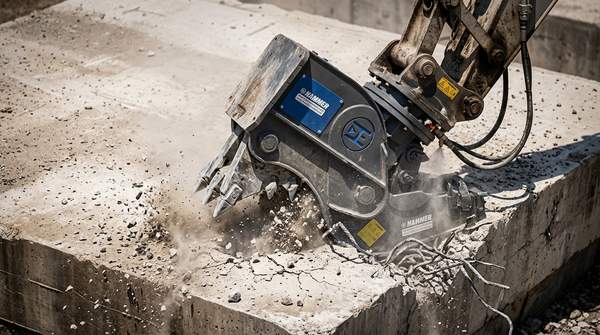
How Advanced Tech Reshapes Construction Jobs
| Technology/Capability | Current Impact (2026) | Future Outlook (Next Decade) |
|---|---|---|
| Bedrock Robotics Operation | Single operator manages multiple self-driving machines simultaneously, reducing immediate on-site labor needs for specific tasks. | Multiplies output without multiplying labor, fundamentally altering site management and reducing on-site human presence. Focus shifts from direct operation to remote supervision. |
| Automation & Remote Operation | Technologies are being developed to multiply existing workforce efforts, enabling more work with fewer hands. | A single individual may oversee work previously requiring dozens, shifting roles from hands-on craft to remote oversight. This transformation implies a significant reskilling requirement. |
| Autonomous Rollers & Compaction | Emerging in specialized applications for groundwork and asphalt, offering consistent quality. | Dr. Stefan Klumpp of HAMM AG believes widespread adoption will occur in the next 20-30 years, making road construction more cost-effective, efficient, and better, according to Electrek. Benefits of automation include enhanced safety. |
Data compiled from Electrek, 2026.
Innovations mean fewer human operators can achieve more, fundamentally altering job roles and site management. The 'skill shift' moves from hands-on craft to remote oversight, allowing one person to oversee work previously done by dozens. Automation redefines the entire project lifecycle, not just efficiency.
Why the Industry is Betting on Tech
Kansas City's construction boom, 'the '90s on steroids' with billions in job values, according to KCUR, drives an urgent need for tech solutions. The immense scale and rapid pace of Kansas City's construction boom demand efficiency and cost management. The industry sees a 'false peak' in employment; record job numbers mask an underlying trend of tech investment designed to make future booms less labor-intensive. Massive capital flows into autonomous construction because long-term cost savings and efficiency gains from automation are expected to outweigh current labor demand. This strategic investment aims to future-proof operations, improve project timelines, and make construction more predictable.
The Looming Workforce Transformation
The construction industry is inadvertently training a generation of workers for jobs that will soon be automated, creating a future skills gap.
- While data center construction creates many jobs, the permanent workforce at these sites will be smaller after the initial building phase, according to KCUR. The smaller permanent workforce at these sites after the initial building phase implies that the current job boom is inherently temporary, creating a large but transient demand for labor rather than stable, long-term employment opportunities.
The current job boom is largely temporary, setting the stage for a future where automation significantly reduces operational roles. The temporary nature of the current job boom means the construction industry inadvertently trains workers for jobs that will soon be automated, creating a future skills gap. Workers entering the trades must adapt their skills to a job site where advanced technologies impact efficiency and workforce needs. The shift is towards remote oversight and specialized technical skills.
Preparing for the Automated Job Site
- Construction innovations are progressing rapidly, according to Autodesk. The accelerating pace of construction innovations demands that both industry leaders and individual workers proactively adapt, emphasizing continuous learning.
- The current construction boom serves as a proving ground for new autonomous technologies, even as it creates immediate job opportunities. The current construction boom serving as a proving ground for new autonomous technologies highlights a strategic tension between short-term labor demand and long-term automation goals.
- Future construction projects will likely require a workforce skilled in remote oversight, data analysis, and advanced robotics management, rather than solely hands-on craft.
- Firms that delay investment in automation risk being outmaneuvered by competitors who achieve greater efficiency with reduced human capital. Proactive adoption of advanced construction technologies impacts efficiency and workforce needs, creating a competitive advantage.
By 2026, companies like Bedrock Robotics will likely expand, pushing the industry towards a leaner, automated model, impacting thousands of jobs and demanding a strategic focus on reskilling.


