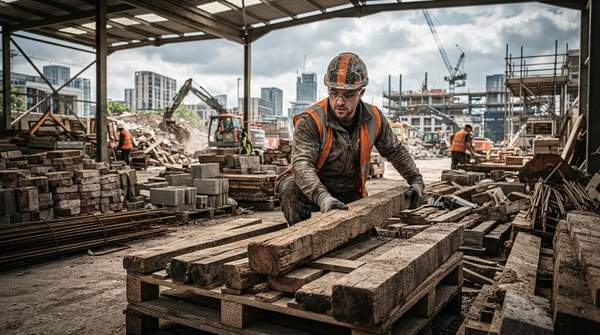
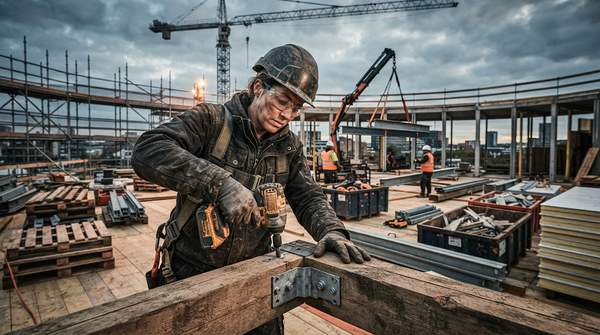
Meta's new data center in Tulsa will support approximately 100 jobs once operational, a stark contrast to the over 1,000 construction workers employed during its build-out, according to The Journal Record. This disparity presents a core challenge for local economies. While these massive facilities demand extensive temporary labor for construction, their long-term operational staffing needs remain surprisingly low.
Data center construction is surging due to AI demand, yet the operational job creation from these facilities creates an economic paradox. The very technology driving this infrastructure boom simultaneously minimizes the need for sustained human labor. This tension exists between significant short-term investment and limited long-term community benefit.
Therefore, while AI fuels substantial capital investment in infrastructure, it automates away many potential long-term operational roles. The result is often an economic sugar rush for communities, rather than foundational growth, despite considerable data center construction spending.
The AI-Driven Infrastructure Boom
AMD reported major data center growth tied to its accelerator portfolio. Surging AI investment and a broader customer push to diversify suppliers are confirmed, according to Data Center Knowledge. Concurrently, U.S. construction spending increased 0.4% in April, exceeding expectations, according to GV Wire. A strong, AI-driven capital flow into specialized infrastructure projects is collectively confirmed by these figures.
A significant, yet temporary, construction boom is signaled by the robust performance of AI-accelerator providers and general construction data. This investment delivers substantial short-term economic stimulus. However, this surge primarily fuels the build-out phase, creating a transient demand for construction labor rather than permanent roles.
Broader Construction Trends and Specific Growth
AI data center demand is "larger than we’re prepared for" despite significant investment, according to a report cited by Data Center Dynamics. This demand specifically targets certain construction market segments. Goldman Sachs projects big tech companies will spend more on AI infrastructure, as reported by Startup Fortune.
A highly focused surge in high-tech construction is indicated by these projections. While overall construction shows positive momentum, the underlying drivers vary considerably. Data centers represent a critical, specialized component of non-residential growth, channeling significant capital investment into their rapid development, often at the expense of other sectors.
Uneven Growth Beyond Data Centers
Investment in private nonresidential structures fell 0.2% in April, according to GV Wire. This figure directly contrasts with the overall U.S. construction spending increase reported in the same month. The discrepancy means that while national construction saw gains, the specific sector most relevant to data centers—private nonresidential—experienced a contraction.
This reveals the data center boom as a highly specific phenomenon, not a universal uplift across all private non-residential construction. It suggests other construction types, like single-family housing, are primarily driving national growth. The data center expansion appears highly localized and does not uniformly reflect in the national private nonresidential aggregate for April.
Future Implications for Tech and Labor
Policymakers must scrutinize the long-term employment guarantees of AI-driven infrastructure projects. The industry's ability to run massive facilities with minimal staff—as few as 20 or 30 employees for over 100-megawatt campuses—means economic returns for local communities concentrate in the initial build-out, not ongoing operations, according to The Journal Record. This efficiency means the very technology driving the construction surge minimizes long-term human labor requirements.
Cities aggressively courting data center development for economic growth likely miscalculate the long-term benefits. The promise of thousands of jobs quickly evaporates into highly automated operations, supporting only a fraction of the initial employment. This creates an economic sugar rush rather than foundational growth for local economies.
By 2026, many communities could face the reality that these massive AI-driven facilities deliver only a fraction of the promised long-term employment, if current automation trends continue.