How to Prevent Arc Flash Hazards: A 2026 Safety Guide

In complex electrical systems, software now instantly calculates worst-case arc flash energy levels and prints compliance labels.

BF
Ben Foster

May 29, 2026 · 3 min read

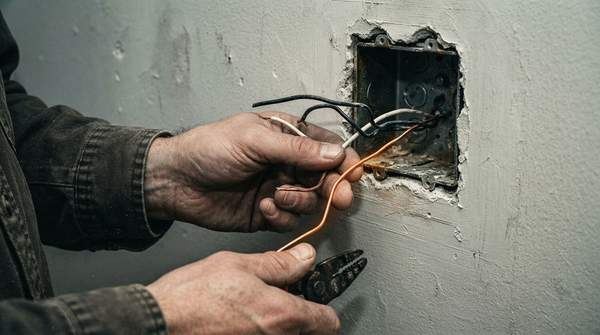
An electrician wearing full personal protective equipment (PPE) stands near electrical equipment, with a simulated arc flash contained and analyzed by advanced software.

In complex electrical systems, software now instantly calculates worst-case arc flash energy levels and prints compliance labels. This task once required extensive manual engineering. Tools like ETAP AC Arc Flash Analysis software exemplify this rapid assessment capability, enabling faster hazard and incident energy analysis. These integrated programs solve multiple scenarios, providing critical data for arc flash prevention and protection in 2026.

However, arc flash analysis software automates complex calculations and compliance labeling. Yet, ultimate responsibility for worker safety and hazard mitigation still rests on comprehensive human risk assessment and adherence to fundamental safety practices. Sophisticated automation, despite its efficiency, cannot fully replace the nuanced judgment and active intervention essential for a truly safe electrical environment.

Organizations integrating advanced analytical tools with a robust safety culture and human oversight will significantly reduce arc flash incidents. Those relying solely on automation risk critical oversights. This balance ensures technology enhances, rather than replaces, essential human expertise in electrical safety.

The Unseen Danger: Why Arc Flash Matters

An arc flash event involves a sudden release of electrical energy, generating intense heat, light, and pressure waves. To address these dangers, an arc flash risk assessment must identify specific hazards, determine injury likelihood and severity, and specify necessary protective measures, including appropriate personal protective equipment (PPE). The Canadian Centre for Occupational Health and Safety (CCOHS) confirms this comprehensive assessment is foundational for safeguarding electrical workers.

Employers must actively select appropriate PPE based on identified risks and specific job tasks. OSHA mandates this requirement, solidifying the legal and ethical obligation to protect personnel. Regulatory bodies and industry standards demand a proactive, multi-faceted approach to arc flash safety, emphasizing thorough assessment and suitable protection.

Streamlining Analysis and Compliance

Modern software streamlines arc flash analysis and regulatory compliance. SKM Systems Analysis software, for example, performs Arc Flash Evaluation. It calculates incident energy and arc flash boundaries. This process adheres to established safety standards like NFPA 70E, IEEE 1584, and NESC, ensuring calculations meet recognized industry benchmarks.

Beyond calculations, these tools automatically produce arc flash labels. These labels comply with NEC 110.16 requirements, providing essential safety information for personnel working near electrical equipment. This automation ensures consistent, accurate labeling, a critical component in preventing human error at the point of interaction with electrical equipment.

Beyond the Numbers: The Limits of Automation

Comprehensive software solutions possess inherent limitations. ETAP claims an 'all-in-one software solution' for arc flash analysis across various voltage systems. However, the Texas Department of Insurance (TDI) asserts: 'The best protection against arc flash hazards is to work on equipment that is completely de-energized.' This reveals a critical distinction: software calculates hazards; de-energization eliminates them.

The ease of automated assessment can inadvertently divert attention from this fundamental safety principle. Companies prioritizing the speed and automation of arc flash software for compliance labeling risk fostering a culture where critical, human-led risk assessment and the fundamental safety practice of de-energization are undervalued. This potentially increases actual workplace danger. Therefore, relying solely on software for 'compliance' without rigorous human oversight risks a false sense of security, potentially leading to increased incidents.

Best Practices for Arc Flash Safety

Integrating arc flash software effectively requires adherence to established best practices. Organizations must use these tools as part of a broader, human-centric safety program, not as a standalone solution. This mandates rigorous training for personnel on software interpretation and the practical application of safety protocols. For more, see our Top Power Tool Safety Practices.

When performing Arc Flash Evaluation, utilizing recognized standards is crucial. SKM Systems Analysis software offers options for NFPA 70E, IEEE 1584, or NESC. Effective arc flash prevention demands informed decisions on which standards to apply, ensuring analysis aligns with specific system requirements and operational contexts.

Common Questions About Arc Flash Analysis

Can arc flash analysis software handle DC systems?

Yes, some advanced arc flash analysis software performs DC Arc Flash analysis. This capability allows comprehensive safety assessments in direct current electrical environments. It expands protection beyond traditional AC systems, according to SKM Systems Analysis.

Does arc flash evaluation provide location-specific incident energy data?

Yes, Arc Flash Evaluation software calculates incident energy and arc flash boundary for each specific location within a power system. This detailed, location-specific hazard data is crucial for precise risk assessment and for specifying appropriate protective measures for individual work areas, as noted by SKM Systems Analysis.

The Future of Electrical Safety

Ultimately, by Q4 2026, companies prioritizing a balanced approach—integrating tools like ETAP with robust human judgment and continuous training—will likely set the benchmark for arc flash hazards prevention and protection.