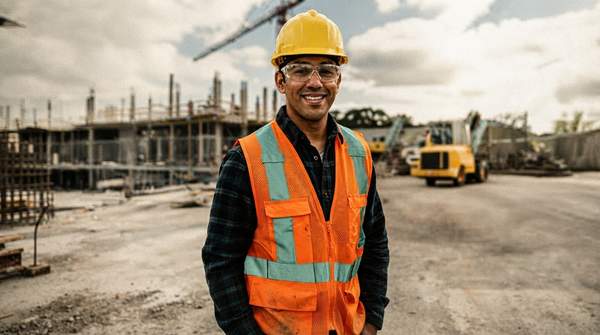
A novel framework, 2D-3CKO-MTHSAN, integrates Discrete Dilated Cosine Causal Convolution with Multi-Head Self-Attention and Discrete Cosine-Krawtchouk-Tchebichef Transform for robust safety equipment detection, according to Nature. The sophisticated system allows for precise identification of safety compliance issues, significantly reducing the margin for human error on complex sites. Such advanced technological capabilities are essential for enhancing job site hazard identification and risk assessment in 2026, protecting workers from preventable incidents across diverse construction environments.
The advanced technological leap marks a significant progression for proactive safety management. It moves beyond the limitations of human observation, improving how construction sites maintain safety protocols amidst complex, hazardous conditions. The sheer scale and rapid changes inherent in modern construction demand tools that can process vast amounts of data quickly and accurately, a task that manual methods cannot consistently achieve.
Traditional safety observation systems are insufficient for dynamic construction sites, but novel AI and drone technologies are demonstrating superior hazard identification capabilities. Companies that fail to adopt advanced AI and drone-based hazard identification systems risk increased incidents and falling behind competitors in safety efficacy and operational efficiency. This creates a clear divide between forward-thinking firms and those facing higher liability.
The Shifting Landscape of Job Site Safety
Modern construction sites present complex and constantly changing environments. Traditional safety observation systems, relying on manual inspections or fixed-based CCTV, are insufficient for these dynamic conditions, according to Nature. This inadequacy means critical hazards can go unnoticed, directly impacting worker safety and project timelines. The rapid pace of construction and the continuous movement of personnel and machinery complicate static monitoring efforts.
Failure to identify or recognize hazards is a root cause of workplace injuries, illnesses, and incidents, as stated by OSHA. The inherent dynamism of modern job sites requires a move from static, human-centric safety checks to agile, data-driven systems. This change helps prevent critical oversights and enhances overall safety, ensuring comprehensive coverage that manual methods struggle to provide.
Based on Nature's validation on real-world sites, companies clinging to manual safety inspections are not just behind the curve; they actively choose a demonstrably inferior and potentially dangerous approach compared to advanced AI-drone systems. This choice can lead to higher operational costs stemming from incidents and regulatory penalties.
Foundational Steps in Hazard Identification
Employers and workers typically identify and assess hazards through a structured process. This involves collecting information, conducting inspections, investigating incidents, grouping similar incidents, considering emergency situations, and prioritizing corrective actions, according to OSHA. Information on workplace hazards can be gathered from various internal sources, including equipment manuals, Safety Data Sheets (SDS), inspection reports, and injury records from previous projects. Worker input, gained through safety meetings and suggestion boxes, also provides valuable site-specific insights.
External sources also contribute to hazard identification, such as OSHA, NIOSH, CDC, trade associations, and unions. These external bodies provide guidelines, research, and best practices that inform site-specific safety plans. While these foundational steps are crucial for any safety program, their manual execution often struggles to keep pace with rapidly changing site conditions. This struggle highlights a gap in traditional approaches, making sites vulnerable to newly emerging or rapidly shifting risks.
The volume and diversity of information required for comprehensive hazard identification present an insurmountable challenge for manual systems. AI's ability to process and synthesize this data from dynamic visual feeds represents a fundamental shift in safety management, moving beyond fragmented human observations.
Overcoming the Limitations of Conventional Methods
The 2D-3CKO-MTHSAN system, validated on real-world construction sites and in controlled laboratory environments, demonstrated superior results in F1-score, recall, and precision compared to conventional deep learning models, according to Nature. The 2D-3CKO-MTHSAN system suggests a new benchmark for automated safety detection, offering a level of detail and consistency previously unattainable. Drones equipped with deep learning capabilities enhance construction site safety by identifying employees, evaluating Personal Protective Equipment (PPE) compliance, and highlighting various hazards, including those in hard-to-reach areas.
The superior performance shows how AI and drone integration fills critical gaps left by human limitations and static surveillance. Such systems offer a more comprehensive and reliable safety net for construction workers, operating continuously and without fatigue. They provide objective data that can inform immediate corrective actions and long-term safety strategy improvements.
The superior F1-score, recall, and precision demonstrated by the 2D-3CKO-MTHSAN framework suggests that construction firms failing to adopt such sophisticated AI are trading short-term cost savings for increased liability and preventable workplace injuries. This gamble will become increasingly untenable as industry standards evolve and the benefits of AI-driven safety become more widely recognized and expected.
Addressing Common Hazards
What are common job site hazards for trades professionals?
Many common job site hazards for trades professionals include slips, trips, and falls from poor housekeeping, inadequate lighting, or unmarked obstacles. These hazards, along with struck-by incidents from falling objects or moving equipment, are consistently among the leading causes of injuries. According to OSHA, addressing these immediate, fixable issues through regular site walkthroughs and prompt cleanup remains a fundamental safety practice, regardless of advanced technological adoption.
How can immediate hazards be addressed on a construction site?
Immediate hazards like spills, misplaced tools, or unsecured debris can be fixed as they are found, preventing potential accidents. Workers can be empowered to take immediate corrective action for such simple issues. Establishing clear protocols for reporting and rectifying minor hazards ensures that even without advanced systems, basic safety is maintained consistently across the site.
What is the importance of risk assessment in construction?
Risk assessment in construction is crucial for identifying potential dangers before they lead to incidents, protecting workers and minimizing project delays. It allows companies to prioritize resources toward the most significant risks, ensuring compliance with safety regulations and fostering a proactive safety culture. Effective risk assessment reduces liability and improves overall operational efficiency by preventing costly accidents.
The Future is Automated, The Future is Safer
The data clearly demonstrates that advanced AI-powered drone systems are essential for effective job site hazard identification and risk assessment in 2026. These systems move beyond the limitations of traditional manual inspections, providing a comprehensive and reliable safety net. Integrating human expertise with the unparalleled analytical power of AI and drone technology ensures a safer and more efficient work environment, protecting workers across all phases of construction.
Construction firms that embrace these technologies will see reduced incidents and improved operational efficiency, gaining a competitive edge in a demanding industry. Conversely, companies relying solely on outdated, manual safety observation systems risk increased workplace injuries, illnesses, and incidents, along with potential regulatory fines and reputational damage. The future of job site safety lies in the intelligent integration of human expertise with the unparalleled analytical power of AI and drone technology, ensuring a safer and more efficient work environment for all.
By Q4 2026, companies like Skanska are projected to expand their AI-drone safety pilot programs by 30%, setting a new industry standard for proactive hazard management and worker protection. Widespread adoption by companies like Skanska underscores a growing recognition that sophisticated technology is not merely an option but a necessity for modern construction safety.