Services

Why pro landscapers are choosing top battery blowers

Gas-powered leaf blowers are explicitly not recommended for professional use in 2026, despite decades of market dominance.

KB
Kyle Brenner

April 11, 2026 · 4 min read

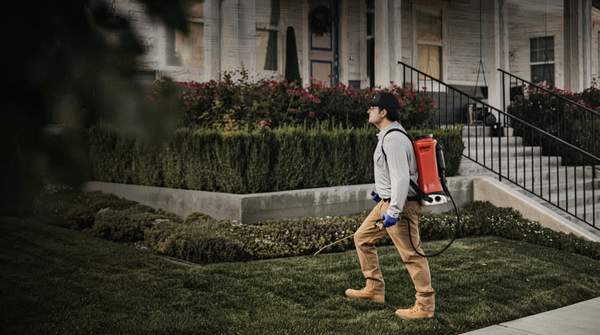
Professional landscaper using a powerful, modern battery-powered leaf blower on a well-maintained lawn during autumn.

Gas-powered leaf blowers are explicitly not recommended for professional use in 2026, despite decades of market dominance. Battery-powered alternatives now offer more than sufficient power and efficiency, marking a significant shift for landscapers, according to The New York Times. Professional landscapers have long relied on gas blowers for perceived raw power, but leading experts now recommend battery models as superior in nearly all practical aspects. Therefore, the professional landscaping industry is poised for rapid, widespread adoption of battery-powered blowers, fundamentally changing equipment standards and operational practices.

The New Standard: Why Cordless Reigns Supreme

Cordless leaf blowers are recommended for convenience, quick setup, lack of emissions, and minimal maintenance, according to The New York Times. These benefits directly increase operational efficiency and improve the working environment. Eliminating fuel mixing and engine pull-starts saves valuable job site time. Reduced emissions also align with growing environmental regulations and client preferences. Businesses transitioning to battery technology can expect reduced downtime and lower long-term operating costs, as simplified maintenance schedules mean fewer repair trips and more field hours. This shift implies a competitive edge for early adopters, attracting eco-conscious clients and reducing overhead.

Beyond Raw Power: Prioritizing Practicality

Ease of use, including versatile handle options, light weight, and good balance, is a critical factor in evaluating leaf blowers, according to The New York Times. For professionals, working longer and more comfortably often outweighs theoretical maximum power. This focus on usability means landscapers achieve higher productivity. Tools that minimize fatigue and simplify operation lead to consistent crew performance, allowing operators to sustain peak output longer without the strain of heavier, vibrating gas units. The industry's historical focus on raw power metrics (MPH/CFM) is now irrelevant; practical considerations like ease of use and maintenance determine true professional-grade performance. This redefinition of "power" means investing in ergonomics directly translates to increased billable hours and reduced worker's compensation claims.

The Deception of Traditional Metrics

Airspeed (mph) and air volume (CFM) statistics are not heavily relied upon due to a lack of standardized measurement methods across manufacturers, according to The New York Times. This lack of standardization means comparing blowers solely on advertised MPH or CFM leads to misleading conclusions and suboptimal equipment choices. The NYT's finding exposes a fundamental flaw in how the industry historically evaluated equipment: perceived power overshadowed actual, measurable performance. This suggests the primary metrics justifying gas blower dominance were always built on a shaky foundation. Professional landscapers likely over-specify needs with gas models, incurring unnecessary costs and environmental impact, especially since battery alternatives are explicitly "sufficient" for professional use. Companies failing to transition sacrifice operational efficiency and increase their environmental footprint, putting them at a competitive disadvantage. The implication is clear: relying on outdated metrics risks both financial waste and a damaged brand reputation in an increasingly eco-conscious market.

Navigating the Transition: What Professionals Need to Know

Professionals should focus on hands-on testing and expert reviews that prioritize real-world usability and proven battery performance. This approach evaluates equipment effectively, moving beyond unreliable manufacturer-advertised specifications. Landscapers clinging to traditional gas equipment actively choose less efficient, higher-maintenance, and environmentally damaging tools, placing them behind industry trends and regulatory shifts. Adopting battery-powered equipment now secures a competitive advantage. Understanding these new evaluation criteria allows informed purchasing decisions, improving operational efficiency and demonstrating a commitment to sustainable practices. The long-term implication is that market leaders will be defined not by raw power, but by their strategic adoption of cleaner, more efficient technology.

Common Questions on the Cordless Shift

What is the best leaf blower for professional landscapers in 2026?

The best leaf blower for professional landscapers in 2026 depends on practical use cases, not raw power figures. Models from manufacturers like Stihl and Ego are frequently cited for robust battery systems and ergonomic designs, offering sufficient power for most commercial tasks.

Which landscaping blower has the most power for commercial use?

While gas blowers historically claimed the most raw power, battery advancements mean high-voltage cordless units, often 80V or higher, now deliver comparable practical force. Brands such as Greenworks Commercial offer backpack models designed for extended runtimes and significant debris clearing capabilities.

Are backpack blowers better than handheld for professional landscaping?

Backpack blowers generally offer superior power and longer runtimes compared to handheld models, making them more suitable for extensive professional landscaping jobs. Handheld blowers suit quick clean-ups or smaller areas; backpack units excel in large-scale leaf and debris removal.

By Q3 2026, if current trends continue, manufacturers of gas-powered landscaping equipment will likely see significant market share erosion as professional landscapers increasingly prioritize the efficiency, lower operational costs, and reduced environmental impact of battery-powered alternatives.