While the European hand tools market is projected to grow by a modest 2.1% annually, one country, Spain, is set to dominate that growth, leading the market through 2027, according to omrglobal. Regional performance suggests a concentrated boost rather than widespread economic vigor across the continent. Such localized strength indicates that companies must look beyond broad market trends to identify true expansion opportunities.
The European hand tools market is growing, but its recovery is uneven and heavily reliant on specific regional performance. This creates a tension between a seemingly positive headline figure and a more complex, fragmented reality on the ground.
Companies must adopt a localized strategy to capture growth, as broad-brush European market approaches may miss key opportunities in this fractured environment.
Spain's Unexpected Market Dominance
Spain is leading the European hand tools market in terms of growth rate and is expected to stay at the top by the end of the forecast period in 2027, according to omrglobal. Spain's singular regional performance suggests that overall market trends may mask significant localized opportunities and dynamics. Manufacturers and distributors focusing on the European market should recognize that growth is not evenly distributed, requiring a targeted approach rather than a continental one.
Without Spain's robust growth, the headline figure for the European hand tools market would likely indicate a market struggling to regain pre-pandemic momentum, challenging any narrative of broad resilience. This reliance on a single country for market expansion creates a precarious dependency for the entire region.
The Pandemic's Lingering Shadow and Uneven Recovery
The COVID-19 pandemic disrupted major end-user industries across Europe, leading to decreased demand for hand tools, according to omrglobal. The widespread economic shock forced businesses to adapt rapidly to changing consumer needs and supply chain challenges. The market's current trajectory is a direct response to, and recovery from, these widespread economic shocks, influencing present demand patterns.
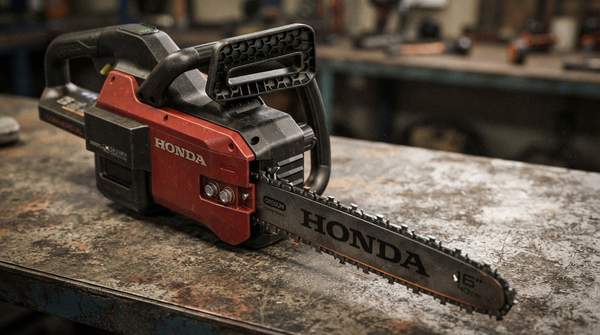
The 'recovery' from the COVID-19 pandemic's impact on the European hand tools market is not a widespread rebound but a highly localized phenomenon, primarily driven by a single country. Many businesses that failed to adapt to pandemic-induced demand drops are now struggling, while those strategically focused on high-growth regions like Spain are seeing success.
A Modest but Stable Path Forward
The European hand tools market, projected to grow at a modest 2.1% CAGR, indicates a stable, albeit not rapidly expanding, market environment for the foreseeable future, requiring strategic positioning. Based on omrglobal's data, Spain's exceptional growth rate is not merely a regional success story but the primary engine preventing the broader European hand tools market from stagnating, signaling a precarious dependency. The modest 2.1% CAGR for the entire European hand tools market, even with Spain's strong performance, suggests that most European countries are still grappling with post-pandemic demand issues, indicating a far slower and more uneven recovery than headline numbers imply.
Navigating a Fragmented Future
- The overall European hand tools market's modest 2.1% CAGR is heavily skewed by Spain's exceptional performance, implying that most other European countries are experiencing near-stagnant or even declining growth.
- The 'recovery' from the COVID-19 pandemic's impact on the European hand tools market is not a widespread rebound but a highly localized phenomenon, primarily driven by a single country.
- Companies adaptable to post-pandemic market shifts and strategically focused on high-growth regions like Spain are positioned to be winners in this fragmented market.
Understanding these nuanced regional and historical factors is crucial for stakeholders to navigate the market effectively and identify strategic investment areas, rather than relying on generalized market assumptions. Businesses relying on broad, undifferentiated European market strategies are likely to be losers, missing the concentrated pockets of growth.
By Q3 2027, companies like Bahco, a prominent hand tool manufacturer with a strong presence in Spain, will likely see continued benefits from their localized strategies, capitalizing on Spain's sustained market leadership through the forecast period.