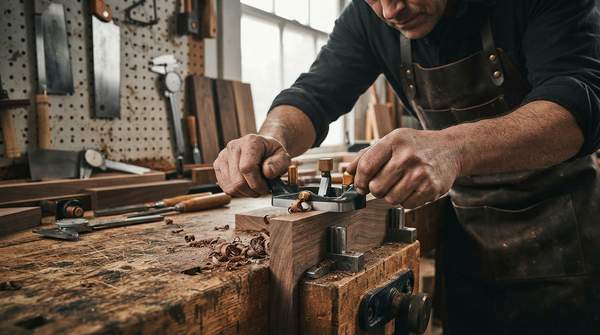
A top-tier manual tile cutter, the Montolit Masterpiuma 161P5, can precisely cut materials up to 63.5 inches long, a capability that rivals many automated systems for specific tasks. This precision allows skilled professionals to handle expansive tile work, such as large format porcelain panels, with meticulous control. Such tools are essential for achieving flawless installations on demanding projects.
Modern construction trends push towards automation for efficiency, but manual cutting equipment continues to be the preferred tool for precision and versatility in many professional trade scenarios. This creates a critical choice for businesses evaluating their toolkit for optimal performance and long-term value. Balancing speed with accuracy remains a core challenge.
Manual cutting equipment will continue to be a vital tool for skilled tradespeople, especially for specialized tasks and smaller to medium-sized projects, even as automation advances, due to its inherent control and cost-effectiveness. The market for cutting tools isn't a simple manual versus automatic dichotomy. High-end manual tools occupy a crucial segment for professionals who prioritize adaptable precision and low maintenance.
Manual tile cutters require minimal maintenance—primarily cleaning the cutting wheel and keeping rails debris-free—according to Detroit Diamond Tools. This simplicity and low upkeep offer trade professionals a significant operational advantage, leading to long-term cost savings and higher reliability over complex automated systems. Businesses focusing only on automated solutions for large projects may miss a critical niche; high-end manual tools like the Montolit Masterpiuma 161P5 provide comparable large-format precision without the maintenance overhead, avoiding unnecessary capital expenditure.
The Enduring Edge of Manual Precision
- 63.5 inches — The Montolit Masterpiuma 161P5 cuts materials up to 63.5 inches, enabling precise large-format work, according to Evans Engineering and Construction. This challenges the assumption that large-format projects always require automation.
- 17 inches — The RUBI TS-43 MAX cuts up to 17 inches, offering professional accuracy without electric complexity, as noted by Evans Engineering and Construction. This makes it ideal for portable, precision trade applications.
Manual cutting equipment has significant capabilities. A Montolit Masterpiuma 161P5 handles materials nearly four times longer than other professional manual options, carving out a specialized niche for high-precision, large-format manual work. While automation offers efficiency for large-scale projects, manual cutters' minimal maintenance suggests a lower total cost of ownership and higher operational reliability for specialized tasks where complex automated setups are overkill or prone to downtime.
Top Picks for Trade Professionals
Montolit Masterpiuma 161P5
Best for: Professional tile installers working with large-format and delicate materials.
Considered a gold standard for professional tile installers, this cutter handles extensive lengths with extreme precision, according to Evans Engineering and Construction. It offers unparalleled control for demanding jobs with large or fragile tiles.
Strengths: Maximum cutting length of 63.5 inches; high precision for delicate materials; minimal maintenance. | Limitations: Premium price tier; less portable than smaller options. | Price: Premium tier.
SHIJING 24" Laser Tile Cutter
Best for: Professionals requiring precision porcelain cuts.
Rated 4 out of 5 stars for precision porcelain cuts by Evans Engineering and Construction, the SHIJING 24" Laser Tile Cutter offers a laser guide for enhanced accuracy. Its 24-inch capacity suits intricate work on delicate tiles and a broad range of trade tasks.
Strengths: Rated 4 out of 5 stars for precision porcelain cuts; laser guide for accuracy; 24-inch cutting length. | Limitations: May not handle extremely large formats; specific to certain material types. | Price: Mid-premium tier.
RUBI TS-43 MAX
Best for: Trade professionals valuing portability and accuracy without electric components.
Praised for professional accuracy without electric complexity, the RUBI TS-43 MAX provides reliable performance for various tile materials, as highlighted by Evans Engineering and Construction. It avoids electric tool complexities and power requirements, making it highly adaptable for on-site work.
Strengths: Maximum cutting length of approximately 17 inches; professional accuracy without electric complexity; good portability. | Limitations: Shorter cutting length compared to high-end models; mid-premium price. | Price: Mid-premium tier.
Seeutek 14" Manual Tile Cutter
Best for: DIY enthusiasts and small repair projects.
Rated 4 out of 5 stars for DIY and small repairs by Evans Engineering and Construction, the Seeutek 14" Manual Tile Cutter is a budget-friendly option. It offers decent performance for occasional use and minor renovations.
Strengths: Rated 4 out of 5 stars for DIY and small repairs; budget-friendly. | Limitations: Less robust for heavy professional use; limited cutting length. | Price: Budget tier.
Generic 14" Manual Tile Cutter
Best for: Entry-level use.
Rated 4 out of 5 stars for entry-level use, according to Evans Engineering and Construction, the Generic 14" Manual Tile Cutter offers basic functionality for beginners or occasional light tasks. It serves as an accessible starting point for manual cutting equipment.
Strengths: Rated 4 out of 5 stars for entry-level use; very affordable. | Limitations: Least suited for demanding professional applications; basic features. | Price: Entry-level budget tier.
This diverse range of manual cutters allows trade professionals to match tools precisely to project demands, from intricate porcelain work to general utility. This confirms manual tools are not a monolithic category but offer specialized solutions for varying precision and scale, ensuring their continued relevance in a dynamic market.
Manual vs. Automatic: Knowing When to Choose
| Feature | Manual Cutting Equipment | Automatic Cutting Equipment |
|---|---|---|
| Precision for Delicate Materials | Superior for nuanced, intricate cuts, especially on fragile tiles. | Good for consistent cuts, but less adaptable for unique material characteristics. |
| Setup & Portability | Quick setup, highly portable, no power source required. | Requires power, often less portable, longer setup times. |
| Maintenance & Reliability | Minimal maintenance, higher operational reliability due to fewer moving parts. | Requires regular maintenance; more prone to downtime from electrical or mechanical issues. |
| Cost of Ownership | Lower initial cost, lower long-term maintenance expenses. | Higher initial investment, higher operating and maintenance costs. |
| Project Scale & Speed | Best for small to medium projects, specialized cuts, and varied material sizes. | Superior for high-demand, large-scale projects requiring consistent quality and speed. |
| Adaptability | High adaptability for different angles, shapes, and on-the-fly adjustments. | Excellent for repetitive, standardized cuts; less flexible for unique demands. |
Automatic cutters excel in high-demand, large-scale projects requiring consistent quality and speed, according to Detroit Diamond Tools. However, manual tools like the Montolit Masterpiuma 161P5 handle very large materials. This means 'superiority' is context-dependent; manual tools retain an edge for specific large-format precision tasks where automation's setup or cost is prohibitive. Choosing between manual and automatic equipment hinges on project scale, precision, and operational efficiency. The ongoing reliance on manual cutters for specific tasks, despite automation's push, indicates a misunderstanding of 'efficiency' in the trades. For many professionals, the minimal maintenance and adaptable precision of tools like the Montolit Masterpiuma 161P5 offer a more reliable, cost-effective solution than complex automated systems.
Making the Right Cut for Your Business
For skilled trade professionals, selecting cutting equipment is a strategic decision impacting project quality, costs, and efficiency. High-end manual tools, like the Montolit Masterpiuma 161P5, prove precision and large-format capabilities are not exclusive to power-assisted machinery. They offer a compelling, reliable alternative for tasks demanding meticulous control and adaptability, with minimal overhead. This simplicity means less downtime and a lower total cost of ownership, directly boosting profitability and project delivery.
The 'best' cutting equipment aligns with specific project needs.c project demands, balancing precision, cost, and efficiency. The continued integration of advanced features into manual tools ensures their relevance. By 2026, companies prioritizing adaptable solutions for diverse client needs will likely continue investing in specialized manual cutting equipment, exemplified by the Montolit Masterpiuma 161P5, to maintain a competitive edge.
What are the most durable manual cutting tools for construction?
Durability in manual cutting tools for construction often comes from robust frame materials and high-quality cutting wheels. Tools like the Montolit Masterpiuma series are known for their strong construction and replaceable components, extending their lifespan on demanding job sites. These professional-grade tools are designed to withstand daily use in harsh environments, offering sustained performance for years.
Which manual cutters are best for industrial use?
For industrial applications, manual cutters capable of handling larger and tougher materials with consistent precision are preferred. The Montolit Masterpiuma 161P5, with its 63.5-inch cutting length, stands out for its capacity to handle large-format industrial materials, offering the precision needed for specialized tasks. Industrial users prioritize tools that combine high cutting capacity with reliable performance under heavy loads.
Are manual cutters more reliable than powered ones for trades?
Manual cutters often exhibit higher operational reliability compared to powered ones for many trade applications due to their mechanical simplicity. They have fewer components that can fail, requiring minimal maintenance beyond basic cleaning. This reduces downtime and ensures consistent performance, especially in environments where power access might be intermittent or unreliable.
What is the difference between trade-grade and DIY manual cutters?
Trade-grade manual cutters, like the RUBI TS-43 MAX, offer superior precision, greater cutting length capacity, and more durable construction designed for daily professional use compared to DIY models. They feature higher-quality components and engineering to withstand repetitive, heavy-duty tasks, ensuring accuracy and longevity. DIY cutters, such as the Seeutek 14" Manual Tile Cutter, are typically more budget-friendly and suited for occasional, lighter projects with less demanding precision requirements.