Most homeowners can decide whether to call an electrician about their electrical panel by looking at three things: what the panel is doing, how old it is and who made it, and what you plan to plug into it. If your breakers trip often, your lights flicker, your panel buzzes or feels warm, or your panel is a Zinsco or Federal Pacific model, you should schedule a professional inspection promptly. If none of those apply but you're planning an EV charger, heat pump, or major renovation, you should still get an assessment before the project starts. This article walks through each factor and ends with a decision framework you can use to classify your own situation.
Understanding Your Home's Electrical Heartbeat
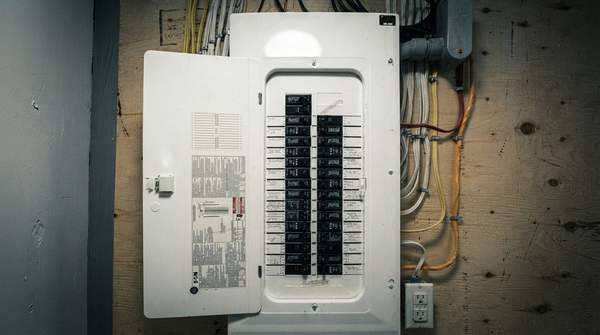
The electrical panel is the distribution point for your entire home: it splits incoming power into circuits and protects each one with a breaker that trips when a circuit draws more current than it can safely carry. A panel that is undersized, aging, or faulty cannot safely deliver the power a modern household demands, and the consequences range from nuisance breaker trips to fire risk. According to Powering Pacific Northwest, an adequate panel reduces the risks of overload and electrical fires while providing the capacity modern electrical needs require.
That is why a single number—panel amperage—isn't enough on its own. A 100-amp panel may be fine for one household and inadequate for another, because the answer depends on the home's calculated load, the panel's condition, and what you plan to add. A formal load calculation must be performed by a licensed professional; what a homeowner can do is recognize the warning signs and risk factors described below.
Observable Warning Signs of an Overloaded Panel
Powering Pacific Northwest lists several signs that it may be time to upgrade: frequent tripped breakers or blown fuses, flickering or dimming lights, a panel that is hot to the touch or makes buzzing sounds, and relying on multiple extension cords or power strips to meet your power needs. Each of these symptoms points to a system struggling to deliver electricity safely.
Some signs are more urgent than others. A panel that is warm, buzzing, or emitting a burning smell is a safety hazard that warrants immediate professional attention, not a scheduled checkup. Frequent breaker trips and flickering lights are less dramatic but still indicate the panel may be unable to meet your household's demand. None of these observations require opening the panel—homeowners should not attempt any inspection of panel interiors, which is a job for a licensed electrician.
Panel-Specific Risk Factors: Age and Brand
Even a panel with no symptoms can be a problem. Powering Pacific Northwest notes that older panels—25 years or more—may not meet current safety standards. Age matters because electrical standards and safety knowledge evolve, and a panel installed decades ago was designed for a different era of household electricity use.
Brand matters too. Tradesman Electric's replacement guide is written specifically for owners of aging panels, "especially those with Zinsco or Federal Pacific systems on the recall list." These brands have documented safety concerns regardless of whether the panel currently shows symptoms, and they are often candidates for replacement even when capacity is technically sufficient. If your panel label reads Zinsco or Federal Pacific, that alone is a reason to consult a professional.
Planning for the Future: New Appliances and Renovations
Upgrades are often driven not by failure but by plans. Tradesman Electric explains that a service upgrade becomes necessary when adding major appliances—heat pumps, EV chargers, solar systems, electric ranges, or dryers—that require more power than the current panel can safely provide. These additions can push a household's electrical demand past what an older panel was built to handle.
Power Doctors recommends discussing future plans—kitchen remodeling, additional HVAC equipment, workshop installations, or electric vehicle charging—during the initial assessment with an electrician. Even if new equipment won't be installed immediately, understanding potential future loads helps guide decisions about panel configuration, circuit space, and service capacity, and an appropriately planned upgrade may reduce the need for additional modifications later.
Your Electrical Panel Upgrade Decision Framework
Use the matrix below to classify your situation. Find the row that matches your circumstances, then combine the results across the three dimensions—symptoms, panel characteristics, and future plans—to determine urgency.
| Assessment Area | What to Look For | What It Means | Recommended Action |
|---|---|---|---|
| Observable symptoms | Frequent breaker trips or blown fuses; flickering or dimming lights; heavy reliance on extension cords or power strips | The panel may be struggling to meet your household's electrical demand | Schedule a professional inspection |
| Critical symptoms | Panel hot to the touch, buzzing sounds, or burning smell | Serious safety hazard | Seek immediate professional attention |
| Panel age | Panel is 25 years old or older | May not meet current safety standards | Schedule a professional inspection |
| Panel brand | Zinsco or Federal Pacific panel | Documented safety concerns regardless of capacity | Consult a professional about replacement |
| Future plans | Adding an EV charger, heat pump, central air, electric range, dryer, solar, or a kitchen or workshop renovation | New load may exceed what the current panel can safely provide | Get an assessment before the project begins |
Here is how to read the result. If any critical symptom appears—heat, buzzing, or a burning smell—treat it as urgent and contact a licensed electrician immediately. If you have recurring symptoms, an older panel, or a recalled brand, schedule an inspection soon. If your only trigger is a planned addition, book the assessment before purchasing or installing the new equipment. If none of the rows apply, your system is likely adequate for now, though only a professional evaluation can confirm that.
Next Steps: When to Call a Professional
Homeowners should consult a licensed electrician for an assessment if they identify any observable warning signs, have an older or recalled panel, or plan significant electrical load additions. During the visit, the electrician will evaluate your existing load, panel condition, and wiring, and will distinguish between a simple panel replacement and a full service upgrade—the latter typically needed when adding high-demand equipment like heat pumps or EV chargers. This framework is a preliminary guide, not a substitute for professional electrical evaluation, and no homeowner should attempt DIY work on a panel.
The measurable next step is a detailed quote from a qualified electrician outlining the scope of work and costs. That document turns a vague worry into a concrete decision: it will state whether your panel needs replacement, whether a service upgrade is required, and what the work will entail—giving you a basis to compare electricians and plan your project with confidence.
Sources
- Is Upgrading Your Home’s Electrical Panel Worth It? — Powering Pacific Northwest
- Mastering the Electrical Panel Replacement Process: A Practical Guide — Tradesman Electric
- When Should You Upgrade Your Home's Electrical Panel? - Power Doctors