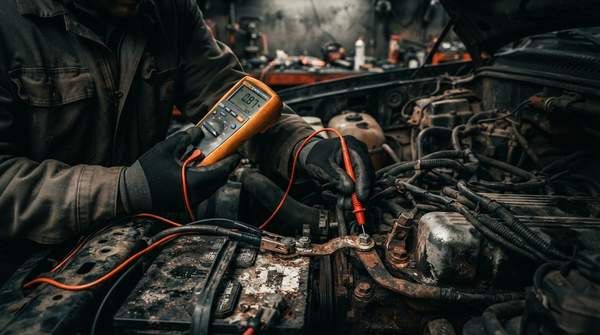
Diagnostic and testing systems now account for an estimated 35-40% of all revenue in the global automobile garage equipment market, according to IndexBox. The 35-40% share significantly outpaces other essential tools, marking a profound shift in financial value within automotive services. Service centers must recognize this revenue concentration to secure future profitability.
The overall garage equipment market is growing, but financial value increasingly concentrates in complex diagnostic tools, not traditional mechanical infrastructure. Vehicle lifts represent 25–30% of demand by unit volume, yet diagnostic systems command a significantly higher price point or profit margin per unit. This tension between foundational investments and high-value technology positions service centers that strategically enhance diagnostic capabilities for greater profitability and long-term sustainability.
Market Expansion Demands Strategic Tool Investments
The global Automobile Garage Equipment market is projected to grow 4.6% annually from 2026 to 2035, states IndexBox. The projected 4.6% annual growth from 2026 to 2035 forces service providers to re-evaluate traditional workshop setups. As vehicle complexity and EV service needs rise, strategic equipment investments, particularly in diagnostics, become critical to capitalize on this growth.
Essential Diagnostic Tools for Modern Garages
Diagnostic and Testing Systems
Best for: Comprehensive vehicle analysis, complex fault identification, software updates.
Description: These systems interpret data from vehicle ECUs, providing deep insights into engine, transmission, and electrical issues. Crucial for modern vehicles with integrated digital components, they drive market financial growth. Diagnostic and testing systems account for an estimated 35–40% of total equipment revenue, as reported by IndexBox.
Strengths: High revenue potential, essential for advanced diagnostics | Limitations: Significant initial investment, requires ongoing technician training | Price: Varies widely, often high-end.
Vehicle Lifts
Best for: Underbody repairs, routine maintenance, accessibility.
Description: Vehicle lifts elevate cars for ergonomic access. Fundamental for mechanical repairs and inspections, they improve workshop efficiency and safety. IndexBox reports vehicle lifts represent 25–30% of demand by unit volume.
Strengths: High unit volume demand, improves safety | Limitations: Lower revenue share per unit compared to diagnostic tools, primarily mechanical function | Price: Moderate to high.
Automotive Code Readers & Scanners
Best for: Basic fault code retrieval, live data monitoring, general diagnostics.
Description: These tools connect to a vehicle's OBD-II port to read diagnostic trouble codes (DTCs) and live sensor data. They serve as a first line of defense for identifying vehicle problems. Prices range from $89.00 to $1,550.00 on eBay.
Strengths: Versatile, affordable entry point, immediate fault identification | Limitations: Less depth than advanced systems, may require additional software for specific vehicle makes | Price: $89.00 - $1,550.00.
VCM 3 Ford Rotunda Diagnostic tool
Best for: Ford, Lincoln, and Mercury vehicle diagnostics, module programming.
Description: The VCM 3 is a specialized diagnostic interface for Ford vehicles, enabling dealer-level diagnostics, module programming, and guided troubleshooting.
Strengths: OEM-level capabilities for specific brands, critical for complex Ford repairs | Limitations: Brand-specific, high cost, steep learning curve | Price: High.
MUCAR CS6 Car OBD2 Scanner Code Reader
Best for: Personal use, small garages, quick checks for various car brands.
Description: This OBD2 scanner offers basic diagnostic functions: reading and clearing fault codes, and live data streaming. It provides an accessible entry point for general vehicle diagnostics.
Strengths: User-friendly, affordable, broad vehicle coverage for basic functions | Limitations: Limited advanced features, not suitable for complex module programming | Price: Low to moderate.
Ford Rotunda OTC Diagnostic Simulator Tool
Best for: Technician training, diagnostic system familiarization, testing.
Description: This tool simulates vehicle faults and diagnostic scenarios, allowing technicians to practice troubleshooting without a live vehicle. It was previously priced at $35.00, a 20% discount, according to eBay.
Strengths: Enhances training, reduces risk to actual vehicles during learning | Limitations: Not for live vehicle diagnostics, supplementary tool | Price: Low (e.g. $35.00 previously).