How Advanced Automotive Diagnostics Work

A basic automotive diagnostic scanner can take over 30 seconds to retrieve a simple error code, while advanced systems can classify complex driver behaviors with 100% accuracy.

LO
Luis Ortega

April 15, 2026 · 3 min read

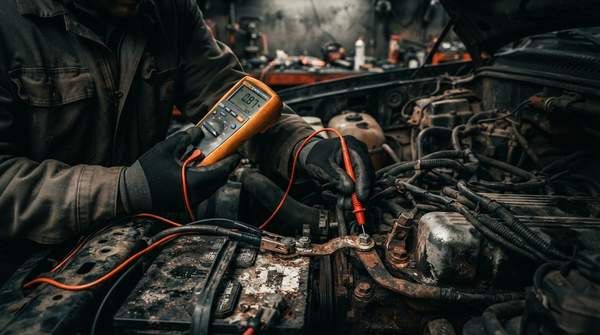
A mechanic using advanced holographic diagnostic tools to analyze a futuristic car's complex data streams in a high-tech workshop.

A basic automotive diagnostic scanner can take over 30 seconds to retrieve a simple error code, while advanced systems can classify complex driver behaviors with 100% accuracy. For instance, the Innova 5610 scanner takes 31.2 seconds to retrieve a simple error code, according to Car and Driver. In contrast, implemented algorithms have achieved 100% accuracy for Random Forest in classifying complex driver behaviors, according to PubMed.

Automotive diagnostic technology is capable of highly accurate, complex analysis of vehicle and driver data, but widely available consumer tools often lag in speed and features. This disconnect leaves drivers reliant on reactive repairs rather than proactive maintenance. As vehicle systems grow more complex, specialized tools and data interpretation become critical for effective maintenance and repair.

Beyond Check Engine Lights: The New Era of Vehicle Data

Modern vehicle diagnostics collect over 50 performance parameters from the OBD interface, including speed, motor RPM, and motor load, according to PubMed. These advanced systems move beyond simple fault detection. Tools like the TopDon Phoenix Nano cover 10 OBD-II modes, support bi-directional controls, and allow for ECU coding and active testing, according to Road & Track. Such capabilities transform diagnostics into a sophisticated interface for deep vehicle system interaction and extensive data acquisition.

Navigating Advanced Diagnostics: What to Expect

Professional-grade tools, such as the TopDon Phoenix Nano, feature Android-based systems and 8-inch touchscreens, making complex capabilities intuitive for technicians, according to Road & Track. The BlueDriver Pro Scan Tool further logs live data in real time. This evolution in user experience makes advanced diagnostics more accessible, enabling faster identification of emerging issues.

The Hidden Delays: Why Some Scanners Fall Short

Consumer-grade scanners show significant variation in basic code retrieval times. The Ancel BD310 takes 18.6 seconds via plug-in to Bluetooth, while the Gearwrench scanner requires 25.4 seconds, and the BlueDriver Pro takes 22.4 seconds for the same task, all according to Car and Driver. These performance differences reveal fundamental limitations in data processing or connectivity, directly impacting user efficiency and patience.

Choosing Your Diagnostic Partner: Beyond Just Codes

Effective diagnostics demand more than quick code retrieval; they require comprehensive, actionable repair information. The BlueDriver Pro Scan Tool provides manufacturer-specific trouble codes and repair suggestions based on Identifix data, according to Road & Track. This capability offers detailed, vehicle-specific insights, guiding more precise repairs. The true value of a diagnostic tool lies in its ability to deliver such specific, actionable data, reducing diagnostic time and improving repair accuracy.

Decoding the Future: Machine Learning in Your Car's Brain

What are the latest automotive diagnostic tools?

Latest diagnostic tools integrate machine learning techniques like Support Vector Machine (SVM), AdaBoost, and Random Forest to classify complex driver behaviors. These tools analyze driving patterns—fuel consumption, steering stability—moving beyond simple error codes to offer predictive insights into vehicle health. Implemented algorithms achieved 99% accuracy for SVM and AdaBoost, according to PubMed.

How do I perform advanced car diagnostics?

Advanced diagnostics require tools that collect extensive vehicle performance data—over 50 parameters like speed and motor load—via the OBD interface. These systems use AI-driven analysis to interpret complex behavioral patterns, not just generic fault codes. Professionals utilize bi-directional controls and ECU coding for direct system interaction and comprehensive testing.

What are the benefits of advanced automotive diagnostics?

Benefits include highly accurate, real-time classification of complex driver behaviors, enabling proactive maintenance. These systems identify subtle patterns indicating potential issues, offering insights into fuel efficiency, braking, and stability. This allows earlier intervention, potentially extending vehicle lifespan and enhancing safety by predicting critical issues.

The Road Ahead: Smarter Cars, Smarter Diagnostics

Given the increasing complexity of vehicle systems and the push for faster data, the automotive diagnostic sector will likely see a significant shift towards integrated, AI-driven platforms by 2026, becoming essential for both professional technicians and advanced DIYers.