AI Boosts Skilled Trades, Threatens White-Collar Tech Jobs

Salesforce CEO Marc Benioff announced in September 2025 that AI advancements eliminated 4,000 customer support roles, according to LockedInAI .

RD
Rick Donovan

June 20, 2026 · 3 min read

A split image showing a robotic arm processing data on one side and skilled tradespeople working on a construction site on the other, illustrating AI's impact on different job sectors.

Salesforce CEO Marc Benioff announced in September 2025 that AI advancements eliminated 4,000 customer support roles, according to LockedInAI. The elimination of 4,000 customer support roles shows AI's direct impact on traditional white-collar positions and forces a re-evaluation of staffing needs within tech.

White-collar jobs were once secure from automation. Now, they are demonstrably more vulnerable to AI displacement than many skilled trades.

This trend inverts the traditional hierarchy of job security. Skilled trades are becoming a more stable and growing career path than many white-collar roles. Google committed $50 million to prepare over 300,000 American workers for skilled-trade careers, as reported by Forbes. Google's $50 million commitment to skilled-trade careers redefines 'future-proof' careers in an AI-dominated economy.

The Unexpected Casualties: White-Collar Roles Face AI's Edge

  • Meta cut 1,000 jobs in its Reality Labs division in January 2026, according to LockedInAI.
  • Meta reduced its AI teams in late 2025, LockedInAI reported.
  • In jobs with high AI exposure, employment for 22- to 25-year-olds fell 6 percent between late 2022 and July 2025, according to ADPresearch.

AI's efficiency gains cut jobs even within tech giants and emerging fields, hitting younger professionals hardest. Companies automate entry-level white-collar functions, closing traditional career entry points. Even Meta cut its own AI teams. No tech role, specialized or not, is immune to AI-driven restructuring.

Why AI Augments Blue-Collar, But Automates White-Collar

AI can automate nearly 57% of U.S. work hours (LockedInAI), targeting repetitive white-collar tasks. In contrast, 95% of fire, electrical, and line safety professionals see a purpose for AI (Forbes). For trades, AI enhances human judgment and physical execution; it does not replace it. However, 25% of trades professionals remain skeptical (Forbes). Clearer demonstrations of AI's practical benefits are needed to bridge this adoption gap.
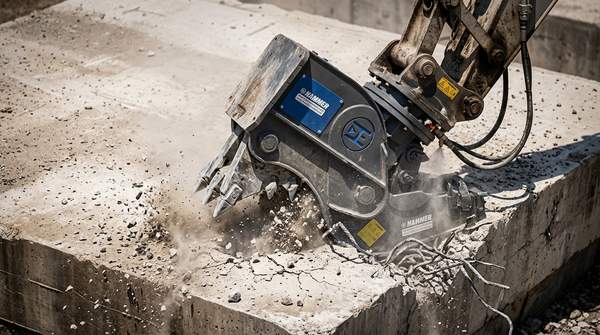
The Resurgence of the Trades: A New Era of Investment and Efficiency

Meta announced a $115 million workforce academy (Forbes), adding to Google's $50 million commitment to skilled trade careers. $165 million from major tech companies marks a strategic pivot. Tech giants now value and empower skilled labor with advanced tools, fostering growth in foundational trades. The $165 million investment signals that blue-collar roles are becoming the new frontier for AI-enhanced productivity and job security.

Navigating the New Landscape: Adapt or Be Automated

The future of skilled trades hinges on effective AI integration. Overcoming skepticism, like the 25% reported by Forbes, requires education and practical demonstrations. Tradespeople must adapt to AI tools to stay competitive and drive modernization.

If current trends continue, companies like Meta and Google will likely expand skilled trades training programs beyond Q3 2026, solidifying investment in an AI-augmented workforce.

Frequently Asked Questions

Will AI replace skilled trades in 2026?

No, AI largely augments skilled trades. 95% of fire, electrical, and line safety professionals believe AI has a purpose in their work. AI enhances workflows and efficiency, serving as a tool for augmentation, not substitution.

How will AI affect MBA software jobs in 2026?

AI impacts entry-level MBA software jobs by automating routine tasks and increasing efficiency. Salesforce eliminated 4,000 customer support roles due to AI (LockedInAI). This decreases demand for basic administrative and support functions in software careers.

What are the future job prospects for trades with AI?

Job prospects for skilled trades are strong and more secure with AI integration. Google and Meta's combined $165 million investment in workforce development academies confirms this. The $165 million investment shows a strategic pivot towards valuing skilled labor, ensuring sustained demand and growth in AI-enhanced fields.