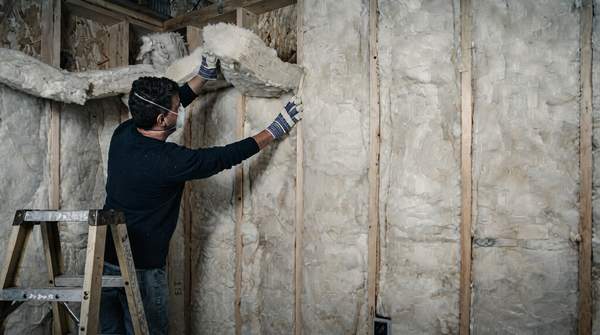
Residential insulation comes in four main categories—blankets (batts and rolls), loose-fill, spray foam, and foam board—and the right choice depends on where you are insulating and how much thermal resistance you need. Focus on Energy ranks these categories from lowest to highest R-value per inch in the order listed above, which means foam board delivers more insulation in less thickness than blanket products. Attics generally call for higher R-values than walls: a commonly cited target is R-23 for exterior walls, while attics may call for R-30, R-38, or R-49, with R-49 or higher considered best. This guide compares the categories and maps them to those targets.
Understanding R-Value: The Key to Insulation Performance
R-value measures an insulation material's resistance to heat flow, and according to Focus on Energy, it depends on the type, thickness, and density of the material, as well as the temperature, moisture levels, and age of the insulated space. Generally, the higher the rating, the higher the performance—though the source cautions that rating alone does not determine how effective insulation will be in a given space. If you install new insulation over an existing layer, all of those factors contribute to the overall R-value of the assembly.
It also helps to know the two primary installation approaches described by the Southeast Energy Efficiency Alliance: continuous insulation, which spans across structures without interruptions and is commonly installed on the exterior of the home, and cavity insulation, which fills the spaces between framing members. Foam board is often associated with continuous applications, while batts, loose-fill, and spray foam typically fill cavities.