Essential Woodworking Joints for DIY Projects

A common butt joint, often seen in beginner woodworking projects, is so inherently weak it frequently results in a 'glue-starved' connection destined to fail, according to Canadianwoodworking .

SR
Scott Ramirez

April 22, 2026 · 4 min read

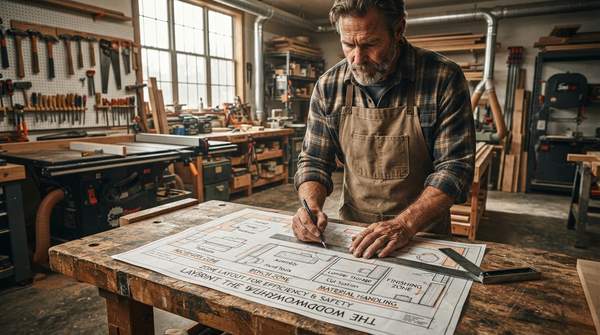
Skilled hands demonstrating the precise creation of a strong woodworking joint in a well-equipped workshop setting.

A common butt joint, often seen in beginner woodworking projects, is so inherently weak it frequently results in a 'glue-starved' connection destined to fail, according to Canadianwoodworking. Many DIY woodworkers choose these seemingly simple joints, but such choices compromise structural integrity and longevity. Without a foundational understanding of essential joint mechanics, projects will fall short of expectations in durability and quality.

1. Butt Joint: Simplest Form, Highest Risk

Best for: Non-structural applications or where reinforced by mechanical fasteners.

The butt joint, the simplest form of joinery, glues two pieces of wood directly together, often end-grain to face-grain. It is very weak and prone to failure when gluing end grain, often resulting in a glue-starved joint, states Canadianwoodworking. Its inherent weakness makes it unsuitable for projects requiring lasting strength, meaning reliance on this joint guarantees short-lived creations.

Strengths: Easiest to cut and assemble. | Limitations: Very weak, prone to failure, poor glue surface area. | Price: Low (minimal tools required).

2. Dowel Joint: Quick but Limited Strength

Best for: Light-duty frames, panels, or alignment purposes.

Dowel joints offer a quick, effective method for joints not requiring extreme strength, as noted by Canadianwoodworking. Cylindrical pins (dowels) insert into corresponding holes, aiding alignment and increasing glue surface over a butt joint. However, relying on dowels for heavy loads will lead to joint failure, despite their improved strength.

Strengths: Aids alignment, adds moderate strength, relatively quick. | Limitations: Requires precise drilling, not for extreme loads. | Price: Moderate (drill, dowel jig, dowels).

3. Dado Joint: Strong Groove Connection

Best for: Shelving, cabinet construction, and drawer bottoms.

A dado joint forms when a groove in one piece accepts another. Cut with a table saw, router, or hand tools, explains Canadianwoodworking. This creates a strong, interlocking connection that resists racking and provides significant bearing surface. Its strength makes it ideal for structural elements, but visible lines mean careful placement is crucial for aesthetics.

Strengths: Very strong, good load bearing, aids alignment. | Limitations: Visible joint, requires precise cuts. | Price: Moderate to High (router or table saw needed).

4. Rabbet Joint: Standard for Casework

Best for: Backs of cabinets, drawer sides, and simple boxes.

The rabbet joint, a standard for kitchen cabinets and casework, involves a step-shaped recess cut along one piece to receive another, according to Canadianwoodworking. It offers limited alignment assistance and increases glue surface over a butt joint. While not the strongest, its simplicity and improved surface area make it a practical upgrade for many basic box constructions.

Strengths: Simple to cut, provides some glue surface, good for alignment. | Limitations: Not the strongest, can be visible. | Price: Moderate (router or table saw needed).

5. Half-Lap Joint: Overlapping Strength

Best for: Frames, light-duty tables, and connecting rails.

A half-lap joint overlaps two pieces after removing half their thickness from each, notes Goldencoastwoodworks. This creates a flush surface and offers a larger glue surface area than a butt joint, significantly increasing strength. The flush finish makes it aesthetically pleasing for exposed frames, provided precision is maintained during cuts.

Strengths: Stronger than butt, good glue surface, flush appearance. | Limitations: Requires precise thickness removal. | Price: Moderate (hand tools or power tools).

6. Miter Joint: Clean Corner Aesthetics

Best for: Picture frames, box corners, and trim work.

The miter joint joins pieces with 45-degree angles, forming a 90-degree corner, as described by Goldencoastwoodworks. This joint offers a clean aesthetic by hiding end grain. However, its strength relies heavily on precise cuts and often requires reinforcement; without it, the joint is inherently weak and prone to separation.

Strengths: Excellent aesthetics, hides end grain. | Limitations: Weak without reinforcement, requires precise angles. | Price: Moderate (miter saw or miter box).

The Hidden Weaknesses: Why Some Joints Fail

Joint TypePrimary StrengthCommon WeaknessBest Use Case
Butt JointSimplicityVery weak, glue-starved end grain adhesionNon-structural, temporary fixes
Dowel JointAlignment, moderate strengthRequires precise drilling, not for extreme loadsLight frames, panel alignment
Dado JointHigh load bearing, anti-rackingVisible joint line, requires precise cutting equipmentShelving, cabinet construction
Rabbet JointBasic alignment, increased glue surfaceLimited strength, visible jointCabinet backs, drawer bottoms
Half-Lap JointGood surface area for glue, flush finishRequires careful material removal for flushnessBasic frames, intersecting members
Miter JointAesthetic appeal, hides end grainWeak without reinforcement, difficult to clampDecorative frames, trim

Precision and Practice: Building Stronger Connections

Mastering essential woodworking joints means overcoming wood's inherent structural limitations, especially when joining end grain. Durable, high-quality DIY projects demand precise execution. Even the strongest joint design fails with poor execution; skill and attention to detail are as vital as the joint choice. A poorly cut dado, for instance, weakens a shelf regardless of the dado's inherent strength. Invest time in accurate measurements, clean cuts, and proper clamping to ensure long-term reliability.

Elevating Your Craft: The Long-Term Value of Strong Joints

If DIY woodworkers commit to mastering these fundamental joints, their projects will likely transition from temporary constructions to lasting pieces of craftsmanship.

Your Joint Questions Answered

How do I choose the right woodworking joint for my project?

Selecting the optimal woodworking joint depends on required strength, joint visibility, available tools, and anticipated stress. For structural components under heavy load, consider stronger options like dado or half-lap joints. Decorative elements might prioritize miter joints with reinforcement.

What basic tools are needed to create strong woodworking joints?

Essential tools for precise woodworking joints include a sharp chisel set, a marking gauge, a hand saw or miter saw for clean cuts, and clamps for secure glue-ups. A router or table saw expands capabilities for dado and rabbet joints.

Can I reinforce weak joints like butt joints?

Yes, weak joints like butt joints can be significantly reinforced. Common methods include biscuits, dowels, splines, or pocket screws. These additions increase glue surface area and mechanical connection, preventing joint failure under stress.