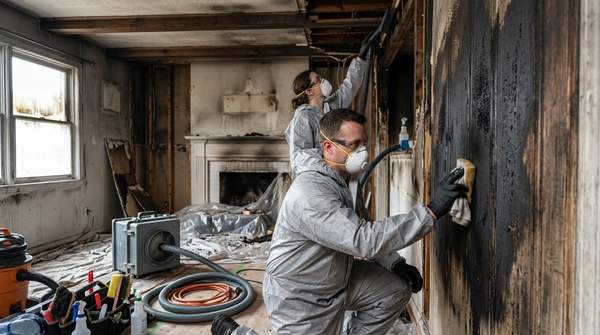
In specialized environments like preparation rooms, accepted industry practice demands a minimum of 15 air changes per hour to ensure worker safety. A minimum of 15 air changes per hour protects personnel from hazardous airborne substances, a critical aspect of maintaining health and safety in 2026. Without such engineered systems, workers face exposure risks that can lead to acute and chronic health issues.
Many workplaces, however, assume basic airflow is sufficient. This overlooks that specific hazardous environments require highly engineered ventilation systems with precise air change rates and strict exposure limits. General building ventilation standards, often equating to just 6 air changes per hour for a 10-foot ceiling, are dangerously inadequate for these specialized tasks.
Companies that fail to invest in and meticulously maintain robust, compliant ventilation systems risk severe health consequences for their workforce and significant legal and financial repercussions. Adherence to specific ventilation requirements is not optional; it is a legal and ethical imperative.
The Mandate: Why Ventilation is Non-Negotiable
A Person Conducting a Business or Undertaking (PCBU) must ensure, as far as is reasonably practicable, that ventilation enables workers to carry out their day-to-day work without risk to health and safety, according to Safework NSW. This mandate establishes a clear legal obligation to provide protective air quality.
Specifically, concentrations of hazardous substances such as dusts, fumes, mists, vapors, or gases must not exceed limits specified in § 1926.55(a) when they exist or are produced during construction work, as outlined by the Occupational Safety and Health Administration (OSHA). This defines 'reasonably practicable' not as a subjective standard, but as a legal obligation to meet precise, often low, exposure thresholds. Businesses therefore have a clear legal and ethical duty to invest in specialized engineering, not just basic airflow, to meet these thresholds. Failing to do so can lead to severe penalties and worker harm.
Beyond Basic Airflow: Specific Standards and Limits
General laboratories using hazardous materials shall have a minimum of 6 air changes per hour (ACH), according to EHS. A minimum of 6 air changes per hour (ACH) is the baseline rate for general hazardous material use.
However, the OSHA Permissible Exposure Limit (PEL) for formaldehyde is no more than 0.75 parts per million as an eight-hour time-weighted average. The OSHA Permissible Exposure Limit (PEL) for formaldehyde of no more than 0.75 parts per million as an eight-hour time-weighted average reveals the potency of certain hazardous materials. Higher air change rates and meticulously designed local exhaust systems are therefore non-negotiable for worker protection.
Effective ventilation is not a 'one-size-fits-all' solution. It demands adherence to precise, context-specific air change rates and strict limits on hazardous substance concentrations. Relying on general building ventilation standards, such as 1 cfm/ft2, dangerously under-ventilates critical areas like preparation rooms, where accepted industry practice mandates more than double that rate, exposing workers to unacceptable risk.
Decoding the Codes: Fire, Mechanical, and Building Requirements
The Fire Code requires exhaust ventilation at 1 cfm/ft2 of floor area for dispensing, use, and storage of hazardous materials in buildings operating above the maximum allowable quantity (MAQ), according to EHS. Exhaust ventilation at 1 cfm/ft2 of floor area illustrates a baseline for general hazardous material areas.
In a room with a 10 ft. ceiling, 1 cfm/ft2 of floor area equates to 6 ACH. While this rate meets some general building ventilation standards, it is dangerously insufficient for specialized hazardous environments like preparation rooms where accepted industry practice demands 15 air changes per hour. This discrepancy creates a critical safety gap.
Ventilation system design must integrate requirements from multiple regulatory bodies, such as fire and mechanical codes. These often translate into specific air change rates based on room dimensions and material handling. Simply moving air is not enough to ensure safety; systems must be specifically designed to prevent dispersion and maintain sufficient volume and velocity to actively gather contaminants.
Tailored Solutions: Meeting Diverse Workplace Needs
ASHRAE recommends a minimum of 12 air changes per hour be supplied to preparation rooms, with at least two of those being outdoor air, according to Certified Safety Training. A minimum of 12 air changes per hour for specialized areas mandates environment-specific risk assessment.
While general laboratories may require 6 air changes per hour, specialized areas like preparation rooms demand significantly higher rates, often pushing to 15 ACH in accepted industry practice. Ignoring these nuanced requirements exposes businesses to significant legal liability and their employees to preventable health risks.
Ventilation systems must be specifically engineered and implemented to meet the unique demands and hazards of each workspace, from educational labs to specialized preparation rooms. These systems often exceed basic minimums to ensure worker protection.
Essential Design: Preventing Harmful Dispersion
What is the best type of ventilation for a workshop?
The best type of ventilation for a workshop depends on the specific hazards present. For preparation rooms, BOCA requires a minimum of 12 air changes per hour, mandating robust general ventilation. Additionally, local exhaust systems are crucial for capturing contaminants at their source.
How do local exhaust systems prevent harmful exposure in workshops?
Local exhaust ventilation systems must be designed to prevent the dispersion of dusts, fumes, mists, vapors, and gases into the air in concentrations that cause harmful exposure, as specified by OSHA. They work by capturing contaminants close to their point of origin, before they can spread throughout the workspace. This targeted approach is essential for protecting worker health.
The Continuous Commitment to Air Quality
Exhaust systems must be designed, constructed, maintained, and operated to ensure protection by maintaining sufficient volume and velocity of exhaust air to gather dusts, fumes, vapors, or gases from equipment or processes, according to OSHA. This comprehensive requirement confirms the ongoing nature of ventilation safety.
If companies fail to prioritize and continuously invest in these highly specialized ventilation solutions, the health and safety of workers in hazardous environments will likely remain compromised, leading to increased regulatory scrutiny and potential legal challenges.