Lowe's CEO Marvin Ellison bets $250M on AI and human skills

Despite investing in artificial intelligence to boost sales and productivity, Lowe's commits $250 million over the next decade.

RD
Rick Donovan

April 13, 2026 · 3 min read

Lowe's CEO Marvin Ellison's $250 million investment strategy balancing advanced AI technology with the critical need for skilled tradespeople in construction and home improvement.

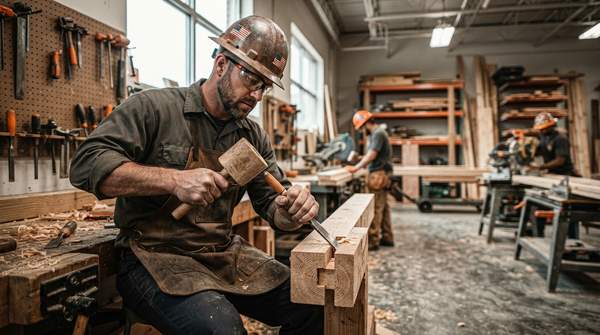
Despite investing in artificial intelligence to boost sales and productivity, Lowe's commits $250 million over the next decade. This funds the recruitment and training of 250,000 skilled tradespeople. The move confirms AI's current limits in physical labor, according to The Times of India and Fox Business. This initiative directly addresses a critical shortage of skilled workers in professions like plumbing and carpentry.

Lowe's leverages AI for internal efficiency and customer experience, but simultaneously makes a massive investment in human skilled labor. This strategy implicitly recognizes AI's inability to perform physical tasks, a tension at the core of the company's future direction.

Companies are likely to increasingly adopt a dual strategy: automating administrative and data-driven tasks with AI while making targeted investments in human expertise for roles requiring physical dexterity, complex problem-solving, and direct customer interaction. This positions Lowe's to dominate both the digital and physical aspects of home improvement.

A Quarter-Billion Dollar Bet on Human Expertise

  • Lowe's foundation will invest $250 million over the next 10 years. This funds training for skilled trades like plumbing, carpentry, and electrical, according to MoneyWise.
  • Lowe's previously invested over $50 million since 2023 in training partnerships. This long-term commitment extends prior efforts, proving a sustained drive to cultivate a vital workforce.

Where AI Ends and Human Skill Begins

Lowe's CEO Marvin Ellison states AI manages administrative tasks but cannot perform physical labor. Tasks like changing a furnace filter or repairing a roof remain beyond AI's current capabilities, Fox Business reports. This perspective sets clear boundaries for AI's role within the company's strategy.


Lowe's employs AI to assist associates in sales, enhance customer shopping, and drive store productivity, according to The Times of India. This confirms Lowe's sees AI as an augmentation tool for specific domains, not a replacement for hands-on expertise. The company's dual approach acknowledges technological advancement and the enduring need for human skill. This strategy implies a future where human judgment and physical capability remain irreplaceable for core service delivery.

The Growing Demand for the Blue-Collar Professional

In 2026, 92% of construction firms report difficulty finding qualified talent. This severe shortage creates an urgent need for skilled workers across various trades, Fox Business states. The demand exposes a significant gap in the workforce.

Furthermore, 47% of skilled tradespeople currently earn more than the median college graduate, according to the same Fox Business report. This attractive earnings potential, combined with the talent shortage, makes Lowe's $250 million investment a direct response to a clear economic imperative. It also counters the narrative that automation devalues blue-collar work.

Securing the Future of Home Improvement

Lowe's operates over 1,700 home improvement stores, serving approximately 16 million customer transactions weekly in the United States, according to Forbes. This extensive reach gives the company's strategic investments broad implications for the home improvement sector.

By proactively addressing the skilled labor gap, Lowe's is not only securing its own future but also potentially influencing the broader perception and availability of these crucial services. This dual strategy positions the company as an indispensable bridge between digital convenience and physical execution, a stance articulated by CEO Marvin Ellison. The company's commitment suggests a future where human-AI synergy gains a significant competitive edge by 2026.

Lowe's dual investment in AI and skilled trades likely sets a precedent for other large retailers, suggesting that true market dominance in the coming years will hinge on a balanced approach to technological efficiency and indispensable human expertise.