What Are Advanced Automotive Diagnostics and Why Do They Matter?

For just $19.95, a specialist can perform a fully-assisted diagnostic scan on your car, revealing issues that once required costly dealership visits and specialized equipment, according to AirPro Diag

LO
Luis Ortega

April 16, 2026 · 3 min read

Mechanic using advanced holographic technology to diagnose a modern electric vehicle in a futuristic auto repair shop.

For just $19.95, a specialist can perform a fully-assisted diagnostic scan on your car, revealing issues that once required costly dealership visits and specialized equipment, according to AirPro Diagnostics. This low-cost access to comprehensive vehicle insights empowers independent repair shops and consumers to identify and address complex automotive problems with unprecedented ease in 2026.

However, the market for advanced diagnostic tools is booming, offering extensive access to vehicle data and repair functions. Yet, the foundational technology for many of these tools, the OBD-II port, is becoming irrelevant for a growing segment of new electric vehicles, creating a significant industry tension.

Therefore, while current diagnostic tools empower consumers and independent shops for traditional internal combustion engine (ICE) vehicles, the long-term trend suggests a shift towards manufacturer-controlled, remote diagnostic ecosystems for EVs, potentially centralizing repair data and control and requiring new skill sets from technicians.

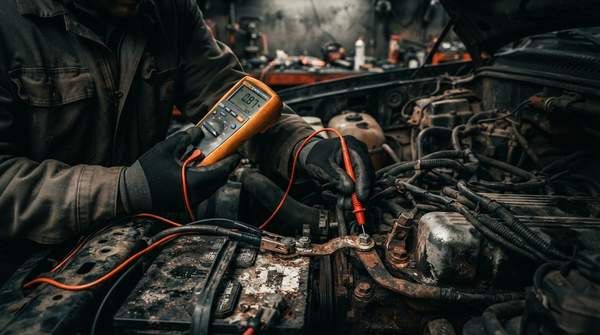
Advanced automotive diagnostics connect specialized tools to a vehicle's onboard computer system, retrieving error codes and performing deeper analyses. Unlike basic code readers, these systems interpret sensor data, activate components for testing, and allow for reprogramming or calibration. Tools like the Topdon TopScan PRO and Topdon ArtiDiag900BT offer broad compatibility, covering over 120 and 130 vehicle brands globally, respectively, as reported by Autotech-WSS. This widespread compatibility democratizes traditional vehicle repair.

A Booming Market for Deeper Insights

The vehicle diagnostics market projects multi-billion dollar growth, reflecting the industry's increasing reliance on sophisticated tools for modern automobiles. Significant global investment in advanced diagnostic capabilities is noted by Cognitive Market Research.


Despite this market expansion, a critical schism is emerging: companies failing to develop proprietary, secure remote diagnostic solutions for electric vehicles risk being confined to a shrinking, commoditized market for internal combustion engine vehicles. Manufacturers with closed systems are poised to dominate future EV diagnostics.

Beyond Error Codes: The Future of Vehicle Health

Modern diagnostic tools offer extensive service functions beyond simple error code retrieval. The Topdon ArtiDiag900BT provides 28 service functions, including oil resets, Diesel Particulate Filter (DPF) regeneration, Steering Angle Sensor (SAS) calibration, Anti-lock Braking System (ABS) bleeding, and battery calibration, according to Autotech-WSS. The Topdon TopScan PRO offers over 13 critical maintenance functions.

However, universal diagnostic ports for electric vehicles are diminishing due to advancements in remote diagnostics. Some manufacturers are eliminating OBD-II ports entirely, making them relevant mainly for emissions testing and insurance monitoring, as stated by Motor. This shift points towards proprietary, highly integrated digital solutions for EV maintenance.

Future innovations in car maintenance may include blockchain for service records, machine learning for predictive diagnostics, and 3D printing for spare parts, notes EdTech Innovation Hub. These technologies suggest a paradigm shift where diagnostics become more integrated, predictive, and potentially remote, further reducing reliance on physical diagnostic ports.

The automotive industry is actively dismantling the 'right to repair' for electric vehicles, forcing consumers and independent shops into a manufacturer-controlled ecosystem. This contrasts sharply with tools like the Topdon ArtiDiag900BT, which democratize repair for older models. A deliberate strategy by EV manufacturers to re-establish control over the lucrative post-sale service market is signaled by the sub-$20 cost for a professional diagnostic scan for traditional vehicles, juxtaposed with the elimination of universal diagnostic ports in EVs. This strategy reverses decades of progress towards open access to vehicle data, threatening to re-establish manufacturer monopolies over vehicle maintenance and limit options for consumers and independent repair facilities.

By Q3 2027, if current trends persist, independent repair shops will likely need to invest in manufacturer-specific training and equipment to remain competitive in the burgeoning EV service market, as companies like Tesla solidify control over diagnostics.