Eight novel attacks, derived from the ISO 15765-2 standard, expose critical vulnerabilities in real passenger vehicle diagnostic communication, according to arxiv research. While On-Board Diagnostics II (OBD-II) systems provide unprecedented vehicle data analysis and driver insights, they are increasingly vulnerable to sophisticated cyberattacks. This creates a direct conflict between diagnostic utility and cybersecurity risk. As vehicles become more connected and data-driven, this trade-off will intensify, demanding robust security to protect vehicle integrity and driver privacy.
What is OBD-II and How Does it Work?
OBD-II is a standardized interface for vehicle self-diagnostics. It provides access to the engine control unit (ECU) and other onboard systems, reporting issues and performance data. The physical access point is a 16-pin J1962 connector, typically near the driver's dashboard, ensuring universal compatibility across manufacturers, according to Geotab. This universal access, while convenient, also centralizes a potential attack vector.
Beyond Check Engine Lights: The Rise of Intelligent Diagnostics
OBD-II systems now support advanced machine learning for driver profiling, moving beyond basic check engine lights. Techniques like SVM, AdaBoost, and Random Forest classify driver behavior into ten categories, including fuel consumption and braking patterns, as detailed in PMC. These models achieve high accuracy—99% for SVM and AdaBoost, 100% for Random Forest—in classifying events like rapid acceleration and high-speed braking, according to PMC. This capability creates detailed driver profiles, offering new services but also exposing significant privacy and safety risks, as such granular data becomes a prime target for exploitation.
The Tools of the Trade: Scanner Performance and Protocols
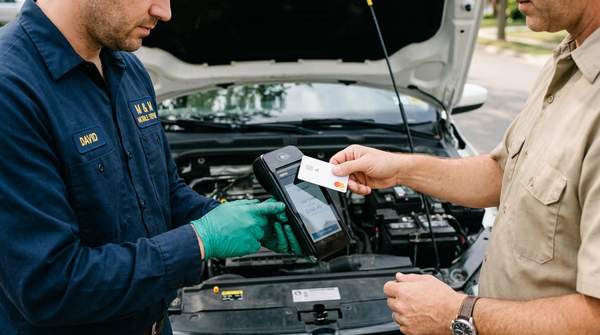
Diagnostic tools offer varying connection speeds. The Motopower MP69033, for example, reads codes in 17.3 seconds, outperforming hardwired scanners, according to Car and Driver. This rapid data access, while convenient, also creates a critical vulnerability. The 'eight novel attacks' identified by arxiv exploit the ISO 15765-2 standard, indicating inherent, standardized vulnerabilities in vehicles. Such swift access means malicious actors could exfiltrate or manipulate sensitive data almost instantly once an attack vector is established, demanding immediate security from manufacturers.