For a residential outdoor or underground project on a standard 120/240V branch circuit, your realistic choice comes down to two options: Underground Feeder (UF) cable, which can be buried directly in the earth, or individual THHN/THWN conductors, which must run inside a protective conduit. The deciding factors are whether the run goes underground, how much physical protection the wiring needs, and what the 2021 International Residential Code requires for the installation. This guide compares both options and explains the code boundaries that determine which one fits your project.
Understanding UF and THHN/THWN Wiring for Outdoor Projects
UF cable looks similar to the non-metallic (NM) cable used for indoor branch circuits, but it is built for a different environment. As Zdravko Noev explains in Wagner Mechanical's wiring overview, UF cable is designed for outdoor and underground applications, with insulation that is tougher and more resistant to moisture. That robust jacket is what allows it to be buried directly without additional conduit protecting it.
THHN and THWN are single conductors, not cables. THHN stands for Thermoplastic High Heat-resistant Nylon-coated, and THWN adds water resistance. These individual wires are meant for use inside conduit systems, where the conduit supplies the mechanical protection the bare conductor lacks. In practice, you will rarely have to choose between the two markings: as ExpertCE's cable guide notes, most THHN conductors are dual-rated as THHN/THWN, with the "W" indicating suitability for wet locations when the marking is present.
Key Differences: UF Cable vs. THHN/THWN Wire
The core distinction is structural. UF cable arrives as a complete assembly — conductors, insulation, and an outer jacket engineered to survive soil and moisture — so it can go straight into a trench. THHN/THWN is a single conductor. Its nylon jacket eases pulling and its thermoplastic insulation carries a high temperature rating of 90°C, but the wire itself has no outer sheath standing between the copper and the ground.
This is why conduit is the dividing line between the two products. Wagner Mechanical describes THHN/THWN as "single-conductor wires used in conduit systems," and that is not a preference — it is how the product is designed to be installed. A THWN marking tells you the conductor's insulation is suitable for wet locations, but the individual conductor still needs mechanical protection from burial and physical damage. The conduit, not the wire's insulation, provides that protection.
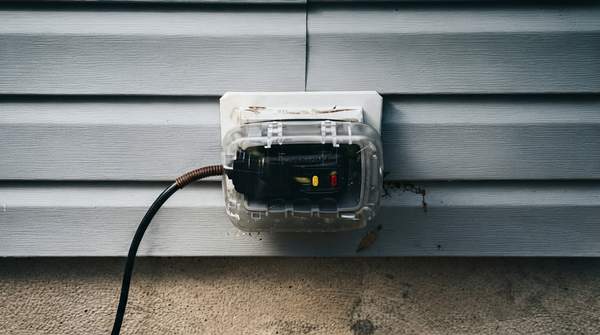
One caution applies to any wet or damp outdoor location: equipment and wiring intended for those environments must be listed for that location classification. A connector-industry article on NEC location classifications points out that products used in wet or damp locations under the NEC generally need a listing from a Nationally Recognized Testing Laboratory, such as UL, specifically for that location — a listing that references code compliance directly. Markings alone, without the correct listing, may not satisfy an inspector.