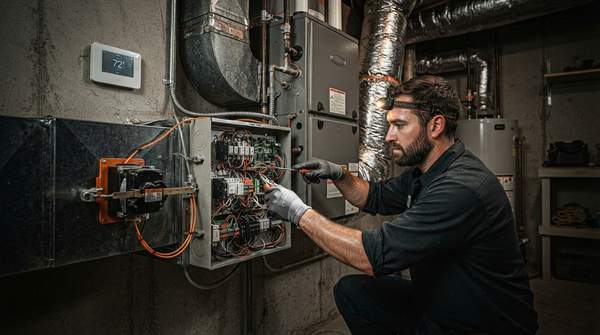
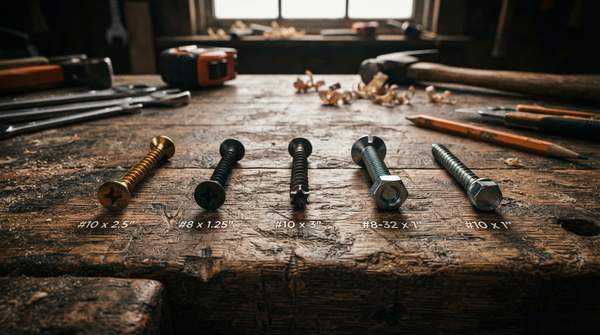
Even a perfectly engineered beam can fail if its fasteners are under-tightened by just a few degrees, or over-tightened to the point of material stress. Incorrect torque application compromises the connection, creating structural weaknesses that may not be immediately apparent, warns bigtimberfasteners. Incorrect torque application, a seemingly minor error, has severe consequences for long-term project stability.
Fasteners are ubiquitous and appear straightforward. Yet, their performance relies on complex interactions of physics, chemistry, and precise application. The tension between perceived simplicity and actual complexity in fastener performance drives many structural failures in woodworking and construction.
A superficial approach to fastener selection and installation introduces hidden vulnerabilities. Companies treating fastener application as trivial, rather than precision engineering, unknowingly build critical flaws into their products. bigtimberfasteners' warnings on incorrect torque confirm this.
Understanding Fastener Fundamentals for Woodworking and Construction
Even a slightly under-torqued fastener can lose significant clamping force. This means robust materials are only as strong as their weakest connection, often the fastener's installation. Over-torquing strips threads or deforms materials, creating immediate or latent failure points. Fasteners join objects, primarily resisting two forces: withdrawal and shear. Withdrawal resistance prevents a fastener from being pulled straight out. Shear resistance prevents it from breaking or bending due to parallel forces. Common types include screws, nails, bolts, and rivets, each optimized for different applications. Understanding these forces reveals why specific fasteners are engineered for specific tasks, not interchangeable.
The Science of Connection: Material, Design, and Load
A fastener's tensile strength directly correlates with its ability to resist pulling forces. This is crucial in woodworking and construction, where fasteners must withstand various loads. Thread pitch and diameter significantly influence a screw's holding power and resistance to stripping. For instance, coarse threads grip better in softer materials like wood. Bolt pre-tensioning creates a clamping force, distributing load across the joint and enhancing shear resistance, as outlined in AISC specifications. A nail's shank and head geometry affects its friction and withdrawal resistance from wood fibers. The seemingly simple fastener form belies a complex interplay of design and material science, all engineered to manage specific structural stresses. Therefore, selecting a fastener without considering its specific material and design properties is a direct path to structural compromise.

Specialized Fasteners for Unique Challenges
Self-drilling screws eliminate pilot holes in metal, speeding assembly. The efficiency of self-drilling screws is critical in modern construction. Deck screws are often corrosion-resistant, designed to withstand outdoor exposure and ensure longevity in harsh environments, as specified by building code standards. Expansion anchors secure holds in brittle materials like concrete or masonry. Structural timber screws can replace traditional bolting in heavy timber construction, simplifying installation, reports the mass timber association. A one-size-fits-all approach to fasteners fails to achieve optimal, durable connections in diverse construction scenarios. Ignoring specialized options introduces unnecessary risk and inefficiency.
The High Cost of Compromise: When Fasteners Fail
Using incompatible materials or ignoring environmental conditions weakens fasteners and compromises structures, warns bigtimberfasteners. Galvanic corrosion, for example, rapidly degrades fasteners when dissimilar metals are used together in moist environments. Improperly sized fasteners lead to pull-out or shear failure under load, causing structural collapse. Initial savings on cheaper fasteners or faster installation are a false economy; the hidden costs of structural failure from overlooked factors like environmental compatibility and material interaction are far greater, bigtimberfasteners' insights confirm. Fatigue failure, from repeated stress cycles, occurs prematurely if fasteners are not rated for dynamic loads. An entire structure's integrity hinges on correct fastener performance. Proper selection and installation are non-negotiable for safe, durable construction.
Common Fastener Questions Answered
What is the difference between a wood screw and a lag screw?
A wood screw has a tapered shank and coarse threads for softer wood, often needing a pilot hole. A lag screw (or lag bolt) is heavier, with a hex or square head and coarser thread. It connects heavy timbers or attaches objects to wood, providing greater shear strength, states the DIY network.
How do I choose the right length of fastener for my application?
Correct fastener length ensures adequate penetration without excessive protrusion. For wood, the fastener should penetrate at least half to two-thirds of the receiving material's thickness for optimal holding power. Consider the combined thickness of materials being joined.
Can I reuse old fasteners?
Do not reuse old fasteners. Material fatigue, thread damage, or corrosion compromise their integrity. A fastener's strength significantly reduces after initial application, leading to unreliable connections and safety hazards.
Proper fastener selection and meticulous lifecycle management, from material compatibility to precise torque, are non-negotiable for structural longevity and safety. By Q3 2026, projects that overlook these details, as bigtimberfasteners warns, will likely face increased warranty claims and structural integrity failures.