What Are Advanced Concrete Admixtures and Why Do They Matter?

Valued at USD 22.78 billion in 2024, the global market for concrete admixtures is projected to nearly double to USD 42.90 billion by 2032, according to Fortune Business Insights . This surge reflects

KB
Kyle Brenner

May 4, 2026 · 5 min read

Futuristic construction site at dawn with advanced concrete pouring technology, highlighting innovation in modern building projects.

Valued at USD 22.78 billion in 2024, the global market for concrete admixtures is projected to nearly double to USD 42.90 billion, according to Fortune Business Insights. The immense scale of construction worldwide, with these chemical compounds becoming essential for modern infrastructure projects, is reflected in this surge. Cities and nations depend on these materials to build stronger, more efficient structures that withstand the demands of rapid urbanization and environmental challenges.

Global infrastructure expansion is driving unprecedented demand for high-performance concrete, but this growth simultaneously necessitates a critical focus on eco-friendly and sustainable building materials. The industry faces a tension between achieving structural excellence and minimizing its environmental footprint. Innovative solutions that can deliver both strength and sustainability are required to meet this challenge.

The future of construction will increasingly rely on sophisticated concrete admixtures to balance structural integrity with environmental responsibility, making them indispensable for urban development. These additives are not merely enhancements; they are foundational to meeting the complex demands of 21st-century building.

The global concrete admixtures market was valued at USD 22.78 billion in 2024, according to Fortune Business Insights. The foundational role admixtures play in the global construction industry is highlighted by this substantial market valuation. These specialized chemicals, added to concrete mixtures, modify their properties, enhancing workability, strength, and durability. The continued expansion of this market, particularly in developing regions, points to a sustained global investment in infrastructure. The critical role these advanced concrete admixtures play in shaping the properties and applications of modern construction projects in 2026 is underscored by this growth.

The Unseen Architects of Modern Concrete

Water-reducing admixtures held the largest market share by type in 2024, according to Fortune Business Insights. These admixtures allow for a reduction in the water content of concrete while maintaining or improving its workability. This reduction in water-cement ratio directly translates to higher strength and reduced permeability in the hardened concrete. Their critical role in improving concrete workability and strength without excessive water, making construction more efficient, is underscored by the dominance of water-reducing admixtures. Despite growing discussions around advanced sustainable materials, the industry's primary focus remains on fundamental resource efficiency, potentially delaying the widespread adoption of truly transformative green concrete technologies.
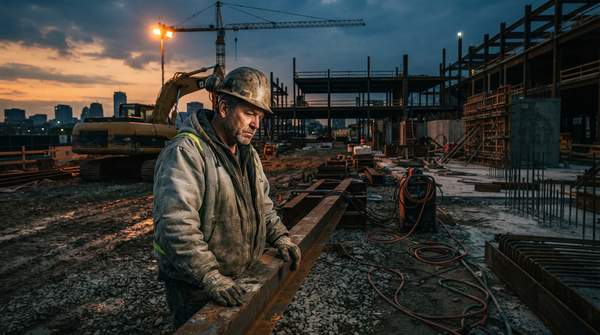

Building Stronger: Admixtures in Advanced Infrastructure

High-strength concrete (HSC) and fiber-reinforced concrete (FRC) are increasingly used in infrastructure projects, according to Technavio. These specialized concretes, enabled by advanced admixtures, offer superior performance characteristics essential for modern construction. HSC provides exceptional compressive strength, allowing for slender structural elements and longer spans in bridges and high-rise buildings. FRC incorporates fibers like steel or synthetic materials to enhance tensile strength, impact resistance, and ductility, reducing cracking. The increasing adoption of HSC and FRC, made possible by advanced admixtures, is vital for constructing resilient and long-lasting infrastructure. The simultaneous rise of high-strength concrete and demand for eco-friendly admixtures reveals a critical paradox: the construction industry is pushing performance limits while simultaneously grappling with its massive environmental footprint, suggesting a future where material science must deliver both or face significant regulatory and public pressure.

The Green Imperative: Sustainable Concrete Solutions

There is a growing demand for eco-friendly and sustainable concrete admixtures, according to Technavio. A crucial industry pivot towards minimizing the environmental impact of construction materials is signaled by this rising demand. Such admixtures include those that reduce cement content, incorporate recycled materials, or extend concrete's lifespan, thereby lowering its carbon footprint. Developers seek materials that align with stricter environmental regulations and public expectations for greener building practices. The tension between rapid infrastructure development and the need for ecological responsibility is directly addressed by this push for sustainability, making these advanced solutions more valuable.

Asia Pacific's Construction Boom Fuels Admixture Demand

Asia Pacific dominated the market with a 64.57% share, driven by infrastructure expansion and urbanization, according to Fortune Business Insights. This region's rapid development includes extensive road networks, high-speed rail lines, and massive urban housing projects. Such large-scale construction efforts rely heavily on concrete, driving the demand for admixtures to optimize performance and efficiency. Asia Pacific's massive infrastructure growth and rapid urbanization make it the leading consumer of concrete admixtures, setting a global precedent for demand. Based on Fortune Business Insights' projection of a near-doubling to USD 42.90 billion, the global concrete admixtures market is not just expanding; it's undergoing a transformation driven by Asia-Pacific's infrastructure boom, making it the bellwether for future construction material innovation.

Future Outlook: Market Growth and Innovation

What are the benefits of using concrete admixtures?

Concrete admixtures provide multiple benefits beyond basic workability and strength. They can significantly improve concrete's resistance to freezing and thawing cycles, reduce drying shrinkage, and enhance its chemical resistance. These properties are vital for structures in harsh environments or those requiring extended service life, ultimately reducing maintenance costs over time.

How do superplasticizers work in concrete?

Superplasticizers, also known as high-range water reducers, are a type of water-reducing admixture that disperse cement particles more effectively in the concrete mixture. They achieve this by imparting a negative charge to the cement grains, causing them to repel each other. This repulsion prevents flocculation, allowing the concrete to flow with less water while maintaining high strength.

What are the different types of concrete admixtures?

Beyond water reducers and superplasticizers, other common types include air-entraining admixtures, which improve concrete's resistance to freeze-thaw damage by creating microscopic air bubbles. Retarding admixtures slow down the setting time of concrete, useful for large pours or hot weather. Accelerating admixtures, conversely, speed up setting and hardening, beneficial for cold weather concreting or early strength requirements.

Enhancing Durability with Mineral Admixtures

Mineral admixtures like fly ash and silica fume enhance concrete's durability and strength, according to Technavio. Fly ash, a byproduct of coal combustion, replaces a portion of cement, improving workability and long-term strength while reducing heat of hydration. Silica fume, a byproduct of silicon and ferrosilicon alloy production, significantly increases concrete's impermeability and compressive strength, making it ideal for high-performance applications. The proven ability of mineral admixtures to boost concrete's fundamental properties makes them indispensable for long-term structural integrity. The integration of these and other advanced admixtures will be critical for construction projects globally, particularly as regions like Asia continue their rapid development.