An artificial intelligence system recently identified novel cement replacement materials, a significant breakthrough that could drastically cut global carbon emissions. Achieved in just weeks, the discovery was a process that would typically span years or even decades for human researchers, according to lead scientists. Initial projections suggest these AI-discovered low-carbon cement replacements hold the potential to reduce concrete's carbon footprint by 30-50%, according to environmental impact studies.
The construction sector is one of the world's largest carbon emitters, but traditional material innovation has been painstakingly slow, creating a critical gap that AI is now rapidly closing. The rapid development of low-carbon cement replacements signals a fundamental shift in how we approach sustainable materials.
AI-powered material science will increasingly become the primary engine for sustainable innovation across heavy industries. Its full impact on established supply chains and regulatory frameworks remains to be seen.
The Concrete Problem: A Global Carbon Challenge
- Cement production accounts for approximately 8% of global CO2 emissions annually, according to the UN Environment Programme (data from before 2025).
- Global concrete demand is projected to increase by 25% by 2050, exacerbating the emissions challenge, states the Global Cement and Concrete Association (data from before 2025).
- Traditional cement manufacturing requires extreme heat, over 1400°C, releasing significant process emissions from limestone decomposition, according to an IEA Report (data from before 2025).
Decarbonizing cement production is critical for global climate targets. The figures demand viable, low-carbon alternatives to meet future construction needs.
How AI Accelerated the Search for Sustainable Solutions
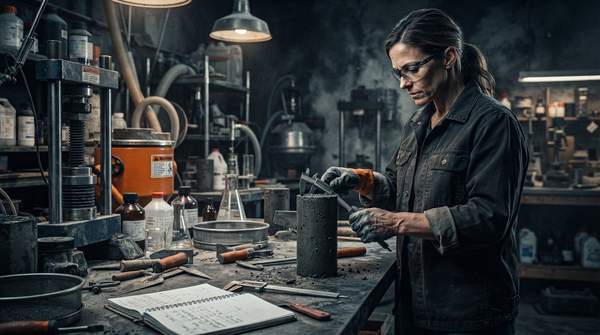
The AI system analyzed millions of material compositions and properties using advanced machine learning, according to a tech company. It simulated material performance, predicting stability, strength, and durability without extensive physical testing, as reported in a journal of materials science. Novel blends of industrial byproducts and mineral wastes resulted, turning liabilities into valuable assets, according to a patent application. Initial lab tests confirm these new materials match conventional Portland cement in strength and durability, according to a pilot project. AI's capacity to sift vast datasets and predict material behavior far exceeds human capability, rapidly shortening development cycles.