Sustainable Bamboo Building Materials for Eco-Conscious Construction

A collection of bamboo houses withstood a 7.

KB
Kyle Brenner

June 21, 2026 · 5 min read

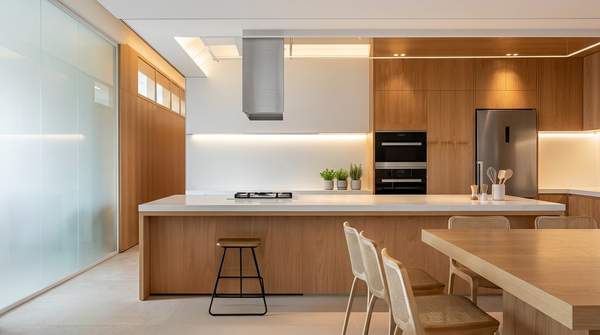
A modern eco-friendly house made of sustainable bamboo, showcasing its natural beauty and structural integrity in a serene natural setting.

A collection of bamboo houses withstood a 7.6 magnitude earthquake in Costa Rica in 1991, while nearby wood and concrete structures suffered significant damage, according to blog sources. The 7.6 magnitude earthquake in Costa Rica in 1991 proved bamboo's inherent flexibility and strength, allowing it to absorb seismic forces that shattered more rigid materials.

Bamboo demonstrates exceptional strength and resilience, yet its widespread adoption in mainstream construction remains nascent. Traditional builders often underestimate its capabilities, viewing it as a temporary or less durable option compared to conventional materials.

Despite this perception, as environmental concerns grow and material science advances, engineered bamboo is set to become a foundational material in sustainable global construction, challenging established norms for the best sustainable building materials for eco-conscious construction 2026.

1. Bamboo

Best for: Eco-conscious developers and remote builders seeking renewable, high-performance natural resources.

Bamboo is a fast-growing grass offering a unique combination of strength, flexibility, and sustainability. It is harvestable within three to five years of planting, according to ScienceDirect. Its natural properties allow it to excel where traditional materials fall short.

Strengths: Strength-to-weight ratio equal to or better than steel and lumber, compressive strength of concrete, according to blog sources. Its strength-to-weight ratio equal to or better than steel and lumber, and compressive strength of concrete, explain its resilience, as demonstrated when bamboo houses withstood a 7.6 magnitude earthquake in Costa Rica in 1991. Carbon sequestration capacity reaches up to 300 tons per hectare, according to IndexBox. Such environmental benefits, coupled with its rapid growth, position bamboo as a key material for a market projected to expand at an 8.2% CAGR through 2035, with residential construction already accounting for over 40% of its volume. | Limitations: Susceptibility to insect attack and moisture without proper treatment; variable natural dimensions. | Price: Moderate, varies by region and processing.

2. BVL (Bamboo Veneer Lumber)

Best for: Engineers and contractors focused on replacing steel reinforcement in low-rise residential structures.

BVL is an advanced engineered bamboo product, typically comprising 90% bamboo fibers and 10% bio-compatible binder, according to blog sources. Its composition of 90% bamboo fibers and 10% bio-compatible binder gives it enhanced structural integrity and consistency compared to raw bamboo.

Strengths: Potentially replaces steel reinforcement in concrete for low-rise housing up to three or four stories. High strength-to-weight ratio. | Limitations: Manufacturing process adds to embodied energy; requires specialized production. | Price: Higher than raw bamboo, competitive with engineered wood products.

3. Engineered Bamboo Products

Best for: Architects and project managers specifying reliable, dimensionally stable materials for modern construction.

This category encompasses various bamboo materials processed to enhance their structural performance, stability, and aesthetic appeal. These products address the variability of natural bamboo. The global market for bamboo construction materials is projected to expand at an 8.2% CAGR through 2035, according to IndexBox, indicating engineered bamboo will be specified in structural and finishing roles across various projects by 2026.

Strengths: High strength, dimensional stability, and aesthetic appeal. | Limitations: Higher production cost than raw bamboo; requires specific manufacturing expertise. | Price: Varies widely based on product type and complexity.

4. Laminated Bamboo Lumber (LBL)

Best for: Structural designers and builders requiring strong, uniform beams and columns for diverse projects.

LBL is created by laminating bamboo strips with adhesives, forming strong, dimensionally stable building components. This process maximizes the inherent strength of bamboo fibers.

Strengths: Offers consistent dimensions and high strength. | Limitations: Requires quality control in lamination; adhesive selection impacts sustainability profile. | Price: Competitive with glulam timber, depending on region.

5. Bamboo Glulam

Best for: Architects and structural engineers designing visually striking, large-span, and high-strength timber-like structures.

Similar to timber glulam, bamboo glulam uses multiple layers of bamboo glued together to create large, strong, and visually appealing structural members. It provides design flexibility.

Strengths: Excellent strength-to-weight ratio; aesthetic appeal. | Limitations: Manufacturing complexity; adhesive choice is critical for environmental impact. | Price: Higher end for engineered bamboo, comparable to high-performance glulam.

6. Bamboo Scrimber

Best for: Builders and manufacturers prioritizing extreme density, durability, and weather resistance for demanding applications.

Scrimber is produced by crushing bamboo culms into strands, impregnating them with resin, and then pressing them into dense, high-strength blocks. This process creates a very robust material.

Strengths: High density and durability; resistance to rot and insects when treated. | Limitations: Resin content can affect recyclability; production is energy-intensive. | Price: Mid-to-high range for engineered bamboo, reflects its durability.

Quantifying Sustainability: How to Compare Materials

The EC3 tool allows users to access published Environmental Product Declarations (EPDs), compare products and materials, and calculate embodied carbon, according to Energy. The EC3 tool enables builders to make data-driven decisions about material environmental impact, moving beyond anecdotal claims.

MaterialPrimary UseEmbodied Carbon (Estimate kg CO2e/unit)RenewabilityStructural PerformanceCost Range (Relative)
Bamboo (Natural)Structural elements, flooring, finishesLow (Carbon sequestering)Rapid (3-5 years)High strength-to-weight, flexible, seismic resilienceLow to Moderate
Engineered Bamboo (e.g. Glulam, Scrimber)Beams, columns, decking, panelsModerate (Due to processing/binders)Rapid (Source material)Very high strength, dimensional stability, durableModerate to High
SteelStructural frames, reinforcementVery High (Energy-intensive production)Low (Recyclable, but not renewable)Very high tensile strength, ductileModerate to High
ConcreteFoundations, slabs, wallsHigh (Cement production)None (Aggregates are finite)Very high compressive strength, durableLow to Moderate
Timber (Conventional Lumber)Framing, sheathing, finishesLow to Moderate (Carbon sequestering, but slower growth)Moderate (Decades for harvest)Good strength-to-weight, versatileLow to Moderate

The Future is Engineered Bamboo

If current market projections hold, engineered bamboo products are likely to become a standard in sustainable construction by 2035, offering a competitive edge in both performance and environmental compliance.

Global Adoption: Where is Bamboo Building Taking Off?

Asia-Pacific remains the dominant production and consumption hub for bamboo construction materials, but adoption is accelerating in North America and Europe, according to IndexBox. The accelerating adoption in North America and Europe confirms growing global recognition of bamboo's structural and environmental benefits.

What are the most eco-friendly building materials?

Beyond bamboo and responsibly sourced timber, materials like recycled steel, reclaimed brick, and natural earth composites (e.g. rammed earth, adobe) are considered eco-friendly. Their environmental impact is often assessed through lifecycle analyses that consider extraction, manufacturing, transport, use, and end-of-life.

What are the benefits of using sustainable building materials?

Using sustainable materials can lead to lower operational costs through improved energy efficiency, better indoor air quality due to reduced volatile organic compounds (VOCs), and enhanced building resilience. They also contribute to achieving green building certifications like LEED or BREEAM, which can increase property value.

How much do sustainable building materials cost?

The initial cost of sustainable building materials can sometimes be higher than conventional alternatives, but this is often offset by long-term savings in energy consumption, maintenance, and potential tax incentives. For example, some regions offer grants or rebates for projects utilizing certified green materials or practices.