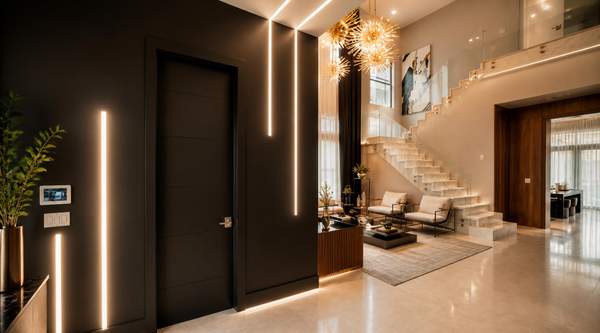
At a luxury residence, speakers vanish into walls and televisions camouflage behind custom artwork. Advanced smart home technology integrates seamlessly without compromising design. This level of integration requires careful planning from the project's start, involving multiple traditional trades. Modern smart home technology offers incredible capabilities, but its full potential for seamless integration and aesthetic harmony is often missed without early, specialized collaboration. As smart home automation systems become more sophisticated, the role of dedicated integrators working closely with traditional trades will be indispensable for high-end residential projects in 2026.
The 'invisibility' of smart home technology is a fundamental design outcome, not an add-on. It requires meticulous pre-construction planning, detailed wiring, robust networking, and a specialized 'tech-design language.' This language develops through early, deep collaboration between technology integrators and traditional design professionals, embedding digital infrastructure into the home's very bones.
Achieving Seamless Smart Home Integration Through Collaborative Design
Barretts.tech collaborates early with architects, providing detailed system schematics, comprehensive wiring plans, and robust networking plans, according to Barretts Tech. They help custom builders embed the underlying infrastructure, ensuring homes are ready for advanced smart technology. Barretts.tech also partners with interior designers, integrating solutions like motorized shading and discreetly hidden TVs. This early, integrated approach enhances both functionality and aesthetic appeal. Companies treating smart home integration as a post-construction add-on compromise both aesthetic potential and functional reliability. This model suggests that successful smart home integration is less about the devices themselves and more about the strategic, pre-emptive planning that traditional trades must now embrace.
Attempting complex smart home integrations through DIY methods leads to compatibility problems, system failures, and security vulnerabilities. Traditional trades overlooking early technology planning face costly retrofits, disrupting construction timelines and inflating budgets. Late integration compromises aesthetics, resulting in visible wires, bulky devices, and mismatched finishes. This oversight negates a custom home's luxury, transforming seamless functionality into visible compromises, diminishing property value and user experience.