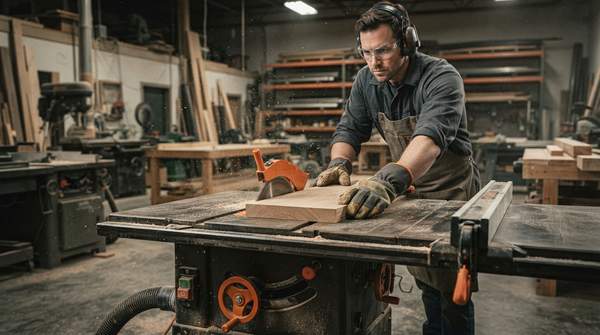
Starting Monday, January 13, 2025, construction employers must provide personal protective equipment (PPE) that properly fits each worker, according to NASPweb. This mandate fundamentally alters industry safety standards, moving beyond generic sizing toward individualized protection across job sites. The revision specifically adds language requiring employers to provide properly fitting PPE to construction industry workers, a detail reinforced by NAHB.
This tailored fit aims to enhance worker safety and comfort. However, it will simultaneously drive up costs for employers and the PPE industry. Ill-fitting gear compromises safety, leading to potential injuries or reduced compliance.
Construction companies unprepared for the January 2025 deadline will face significant compliance challenges and increased operational expenses. Workers, conversely, will benefit from improved safety and comfort, potentially reducing injury rates.
What is OSHA's New PPE Fit Standard?
The Occupational Safety and Health Administration (OSHA) has finalized a revision to its personal protective equipment standard for the construction industry. This new rule, codified at 29 CFR 1926.95(c) according to NASPweb, specifically mandates that PPE properly fits each worker. This marks a significant departure from previous, more general guidelines, shifting the regulatory focus from mere provision to verified efficacy. For more, see our What personal protective equipment for.
OSHA published this final rule, also confirmed by NAHB, to enhance worker protection and comfort by ensuring equipment matches individual body sizes and shapes. This individualized fit is crucial for the effectiveness of safety gear, implying a higher burden of proof and accountability on employers for actual worker protection, not just compliance with general standards.
Beyond the Basics: Employer Responsibilities and Market Impact
To comply, construction employers face new responsibilities. These include thorough PPE fit assessments for each employee. They must also work closely with suppliers to secure a diverse range of sizes, ensuring all workers receive appropriate gear, according to NASPweb. Employers must provide training on proper fit and create mechanisms for workers to report issues.