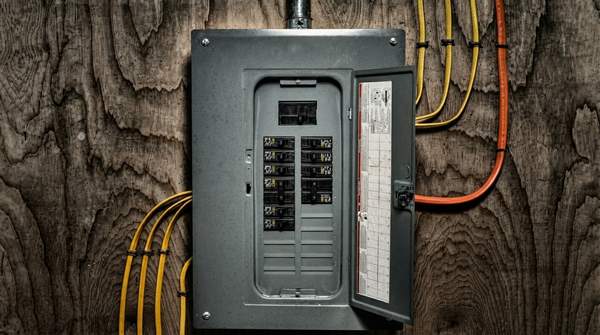
The average time-to-hire for skilled trades has now reached 56 days, surpassing the 54-day average for desk-based professionals, according to news. This extended recruitment period reveals a critical talent shortage in a sector crucial for maintaining infrastructure and driving economic growth. The difficulty in finding qualified tradespeople now exceeds challenges faced by many white-collar industries. This situation exposes a fundamental mismatch between demand for specialized manual and technical skills and current workforce availability. Companies face a critical bottleneck in physical infrastructure and maintenance, a problem AI is currently exacerbating, not solving.
Yet, AI is rapidly integrating into skilled trades. Instead of reducing the need for human workers, it intensifies demand for a new generation of tech-savvy tradespeople. This tension exposes a fundamental mismatch between evolving industry needs and available talent. Traditional training pipelines critically fail to produce this specialized workforce.
Companies and governments now scramble to fund massive training initiatives. The future of skilled labor will be defined by human-AI collaboration, with significant economic implications for those who adapt and those who do not. This transformation demands a proactive approach to workforce development and skill acquisition.
The Unseen Surge: Demand for Tech-Savvy Trades
The demand for robotics technicians has increased by 113.19%. The 113.19% increase in demand for robotics technicians signals a clear shift in the skilled trades sector. Advanced automation is creating new, highly specialized roles rather than simply displacing existing ones. The very tools designed to automate are creating entirely new, highly specialized job categories.
- 113.19% — increase in demand for robotics technicians.
- 77.89% — increase in demand for HVAC engineers.
- 51% — increase in demand for industrial automation roles.
These figures confirm specialized skilled trades are experiencing explosive growth, driven by the very technologies often feared to displace them. The rise in these specific roles shows a future where technical acumen in automation and environmental control becomes paramount for successful tradespeople.

AI's New Toolkit: How Technology is Augmenting Labor
AI-powered robots and drones can now perform tasks like surveying sites and laying bricks in construction, according to Gillmannservices. These tools enhance efficiency and precision, allowing human workers to focus on more complex decision-making and oversight. AI algorithms analyze data from sensors embedded in machinery, enabling predictive maintenance.
| AI Tool | Application in Trades | Human Role Shift |
|---|---|---|
| AI-powered Robots/Drones | Surveying sites, laying bricks, inspecting structures | Supervision, maintenance, complex problem-solving |
| AI Algorithms | Predictive maintenance for machinery and equipment | Data interpretation, proactive intervention, system optimization |
| Augmented Reality (AR) | Real-time information and visual overlays for complex tasks | Guided execution, skill enhancement, remote assistance |
Data compiled from Gillmannservices.
This integration proves AI and AR are becoming indispensable tools. They transform complex manual tasks into augmented processes that require human oversight and interpretation. The nature of skilled work is shifting from purely manual execution to a blend of physical expertise and technological literacy. This creates a scarce hybrid role where tradespeople must possess both traditional craft skills and digital proficiency.
The Broader Shift: Why Demand is Rising Across the Board
Demand for electricians, welders, and construction specialists has increased by an average of 30%. Demand for electricians, welders, and construction specialists has increased by an average of 30% even as AI-powered robots and drones demonstrate capabilities in tasks like surveying sites and laying bricks, as noted by Gillmannservices. While automation handles specific physical tasks, it has not reduced the overall need for human construction workers. Instead, it likely shifts their roles to supervision, maintenance, or more complex tasks, requiring new skills rather than eliminating the need for human involvement.
The integration of AI is not confined to niche roles but is a pervasive trend driving demand even in foundational trades. These professionals increasingly interact with smart systems and advanced equipment, necessitating a new set of skills alongside traditional craft. The complexity of integrating and maintaining these AI systems creates a human talent bottleneck automation alone cannot solve. This intensifies the need for a workforce combining core manual skills with technological literacy, a scarce hybrid role current training pipelines struggle to produce.
The Industry's Response: Massive Investments in Upskilling
The Lowe's Foundation has partnered with Nvidia, General Motors, AT&T, Bank of America, and over 75 other entities to form the Building Futures Skilled Trades Coalition, according to Fox Business. This broad industry collaboration directly addresses the acute talent shortage in skilled trades, recognizing that individual company efforts are insufficient. The coalition represents a unified front to tackle a systemic problem.
The coalition aims to train and certify 1 million skilled tradespeople by 2035, according to Fox Business. This ambitious goal confirms the understanding that the future workforce requires substantial investment in modernizing skills, particularly those needed to work alongside AI and advanced technologies. The scale of the skilled trades shortage is so significant that it necessitates unprecedented, multi-corporate collaborations to build a future-ready workforce.
Forging the Future: Corporate Pledges for AI-Driven Infrastructure
Leading technology companies are directly investing in the human capital required to build and maintain the physical infrastructure for the AI era, signaling a permanent shift in skill requirements.
- Meta, Google, and BlackRock have pledged more than $265 million to train tradespeople specifically for AI data centers, according to Fierce Network.
This significant financial commitment proves that the very infrastructure supporting the AI boom, like data centers, is a primary driver of new skilled trades demand. The investment shows a strategic, systemic challenge requiring massive, coordinated funding to build a workforce for an economy increasingly reliant on tech-managed physical infrastructure. This shift demands deep technical expertise alongside traditional craft, requiring massive, coordinated investment in new training paradigms.
If current training initiatives, like the Building Futures Skilled Trades Coalition, accelerate as planned, the nation's capacity to build and maintain the physical infrastructure necessary for the AI-driven economy appears achievable by 2035.