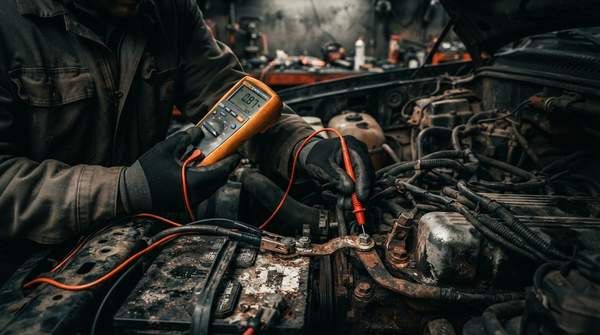
The molten pool during TIG welding can reach up to 19,000 Kelvin (over 33,000 degrees F), a temperature demanding precise application for critical automotive structural repairs. Automotive repair demands welds of immense strength and precision for safety, yet the accessibility and perceived simplicity of some welding methods often lead to choices that compromise vehicle integrity. This creates a dangerous gap: repair professionals and enthusiasts must prioritize technique selection based on material and application to avoid severe consequences.
A recent pmc study evaluated MMA, MAG, and TIG welding on HSLA 320 steel frame rails, revealing significant performance differences. This comparison confirms that not all methods are suitable for safety-critical components; relying solely on MIG welding's perceived versatility for all structural repairs is a dangerous oversight. Careful comparative analysis, not assumed general capability, is paramount for automotive professionals.
Understanding the Core Welding Techniques
Automotive repair relies on several primary welding methods. Gas Metal Arc Welding (GMAW), or MIG, is favored for its speed and ease of use, utilizing a continuously fed wire electrode and shielding gas for general repairs. Conversely, Gas Tungsten Arc Welding (GTAW, or TIG) provides superior control with a non-consumable tungsten electrode and inert shielding gas, producing exceptionally clean, high-quality welds. Shielded Metal Arc Welding (SMAW, or Stick) uses a flux-coated consumable electrode, suitable for thicker materials and outdoor conditions, though less common for intricate automotive bodywork. Misapplying a technique can lead to catastrophic structural failure.
MIG vs. TIG: Choosing Your Arc
The fundamental distinctions between MIG and TIG welding are critical for automotive applications, particularly concerning shielding gases. A 75% argon and 25% CO2 blend provides optimal overall performance for MIG welding, balancing arc stability with penetration, according to Millerwelds. Conversely, TIG welding uses pure Helium and Argon, reports Lincoln Tech. This distinction in shielding gases directly impacts weld purity and material compatibility, with TIG's inert gases enabling cleaner, higher-quality welds on sensitive metals.
| Feature | MIG Welding (GMAW) | TIG Welding (GTAW) |
|---|---|---|
| Primary Application | General repairs, thicker materials, production welding | Precision work, thin materials, exotic metals, aesthetic finishes |
| Ease of Use | Relatively easy to learn and operate | Requires significant skill and practice for mastery |
| Heat Control | Less precise, higher heat input | Excellent, highly localized heat control |
| Shielding Gas | 75% Argon/25% CO2 blend (common for steel) | Pure Argon or Helium (or blends) |
| Filler Metal | Continuously fed wire electrode | Manual filler rod addition (optional) |
| Weld Appearance | Good, but often requires grinding for aesthetics | Clean, precise, high-quality finish, minimal spatter |
MIG Welding: Speed and Versatility for Common Repairs
MIG welding handles a wide range of automotive repair tasks, from 24-gauge up to 1/4-inch thick, states Millerwelds. This makes it practical for exhaust repairs, frame modifications, and general fabrication. However, achieving high-quality welds even with this “simple” method is more complex than often assumed. For body panels up to 1/16-inch, a .023-.024 wire size is recommended. Thicker materials, from 20 gauge to 1/8-inch, benefit from a .030 wire. For heavier sections, like 16 gauge to 1/4-inch, a .035 wire ensures adequate penetration and strength. Proper wire gauge selection is critical for strong, reliable welds.
TIG Welding: Precision for Specialized Materials and Critical Joints
TIG welding provides superior control for carbon steel, stainless steel, galvanized steel, and aluminum of various thicknesses, according to Lincoln Tech. This process excels when precision, aesthetic finish, or exotic metals are required, making it ideal for custom fabrication, intricate exhaust components, and critical structural repairs. The extreme temperatures demand a high level of skill. Specific electrode types, like red (2% thorium) or yellow-tipped (1% thorium) for DC welding, further enhance TIG's capabilities. The PrimeWeld TIG200-D 200-Amp Inverter TIG Welder, affordably priced at $450.00, according to PrimeWeld, removes cost as a primary barrier to adopting superior techniques, shifting responsibility for suboptimal weld choices onto technician training and knowledge.
Common Questions on Automotive Welding
What safety precautions should I take when welding a car?
Always wear appropriate Personal Protective Equipment (PPE), including an auto-darkening helmet, flame-resistant clothing, and welding gloves. Ensure adequate ventilation and keep a fire extinguisher nearby, as sparks can ignite interior materials or undercoating.
How to weld sheet metal for car body repair?
For sheet metal car body repair, use a lower amperage setting and a smaller diameter wire (e.g. .023-.024 inch for MIG) to minimize heat input and prevent warpage. Employ tack welding, making small, intermittent welds and allowing them to cool, to control distortion on thin panels.
What type of welder is best for automotive repair?
The “best” welder depends on the specific repair task. MIG welders are versatile for general repairs and thicker materials, while TIG welders offer precision for thin sheet metal, stainless steel, or aluminum. Many professional shops utilize both, choosing the appropriate tool for the material and structural demands of each job.
As advanced TIG welding equipment becomes more affordable, the responsibility for ensuring vehicle safety through proper technique shifts increasingly onto technician training and informed decision-making, rather than equipment cost.