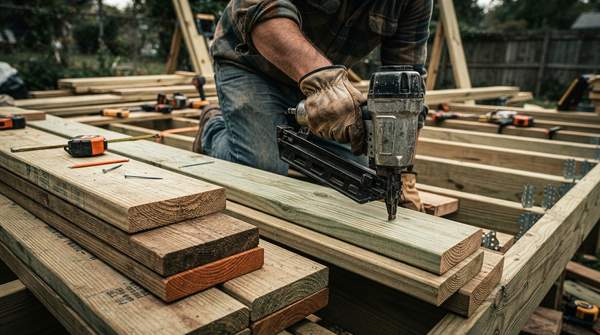
The right treated wood for a deck, fence, or ground-contact post is not a matter of brand preference—it is a matter of matching a preservative's chemical properties to the exposure conditions your project will face. The American Wood Protection Association (AWPA) makes this decision systematic through its Use Category System, which assigns standardized designations like UC3B for decking and UC4A for fence posts. Once you can read those designations, selecting durable lumber becomes a straightforward lookup rather than guesswork.
Why Choose Preservative-Treated Wood for Outdoor Projects?
Untreated wood outdoors is vulnerable to fungal rot, decay, molds, and wood-destroying insects—the problems wood preservative products are designed to control, as the US Environmental Protection Agency explains in its overview of preservative chemicals. Treated wood is most commonly used outdoors, in products ranging from utility poles, fence posts, and rails to structural members, lawn furniture, decks, and playground equipment.
But not all treated wood is created equal. As Chris Denny of American Pole & Timber notes, choosing the right type of treated wood for a specific project can be critical, because different treatments carry different chemical systems with different strengths and limitations. A preservative that performs well on a coated window trim can fail quickly if buried in wet soil. That is why the industry standardizes both the chemicals and the exposure conditions they are rated for.
Understanding the AWPA Use Category System
The Use Category System was developed and is maintained by the American Wood Protection Association, and its purpose is to provide a simple way of selecting the proper preserved wood product directly tied to the appropriate AWPA standard. As the industry's preserved-wood outreach puts it, "The Use Categories define a set of exposures for preserved wood in the environment. Each exposure has a different degree of deterioration hazard."
The system works in one direction: exposure first, product second. AWPA's own guidance instructs specifiers to determine the use category by selecting the expected service conditions, then locate the product type, species, and preservative most appropriate for the application. Considering all of these factors together results in the treatment and inspection requirements for that end use. The standards are updated annually and published in the AWPA Book of Standards, with the full species, preservative, and retention combinations contained in Standard U1.